
William IV (1830–1837) – The Sailor King Who Helped Reform Britain
Who Was William IV?
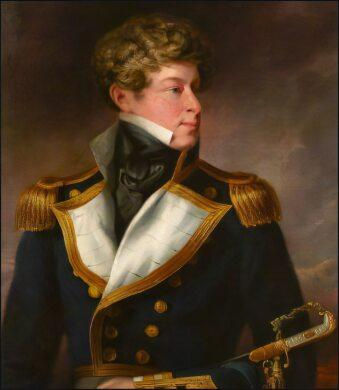
William IV was the younger brother of the extravagant George IV and the third son of George III. Nobody expected him to become king when he was young, so unlike most future monarchs, William actually had something resembling a career: he joined the Royal Navy at just 13 years old.

He served at sea during the American War of Independence, spent time in New York and became known as the “Sailor King.” He remained much more informal than his flamboyant brother George IV and disliked excessive ceremony. When George IV died in 1830 without a surviving legitimate child, 64-year-old William unexpectedly inherited the throne.
From Sailor to King
William's naval career gave him a rather different personality from his brother. He liked walking around London, chatting to ordinary people and sometimes travelled without an enormous royal entourage. His lack of formality made him initially quite popular.
He also inherited a country undergoing enormous change. Britain's cities were growing rapidly because of the Industrial Revolution, but its political system hadn't kept up. Some booming new industrial cities had almost no representation in Parliament, while tiny places with very few voters could still send MPs to Westminster. Something had to change.
The Great Reform Act
The biggest political event of William's reign was the Great Reform Act of 1832.
Before the Act, Britain's voting system was wildly uneven. Places known as “rotten boroughs” could have only a handful of voters yet still elect MPs, while huge new cities such as Manchester had no MPs of their own. The Reform Act abolished many rotten boroughs, redistributed seats towards growing towns and cities, and increased the number of men allowed to vote. Don't imagine Britain suddenly became a modern democracy—most working-class men and all women still couldn't vote. But it was an important step towards the parliamentary democracy Britain has today.
William became involved when the House of Lords resisted reform. Eventually he agreed that, if necessary, he would create enough new peers to get the legislation through. Faced with that threat, opposition weakened and the bill passed.
Ten Children – But No Heir
William's private life gives us one of those wonderfully complicated royal succession stories.
Before becoming king, William lived for around 20 years with the successful Irish actress Dorothea Jordan. They never married, but they had ten children together—five sons and five daughters.

The children were given the surname FitzClarence. “Fitz” was traditionally used in surnames associated with illegitimate royal children, while Clarence came from William's title, Duke of Clarence.
The problem was that none of them could inherit the throne because William and Dorothea weren't married. William later married Princess Adelaide of Saxe-Meiningen. They had children together, but tragically none survived infancy. So despite fathering ten children who reached adulthood, William had no legitimate surviving heir. The crown would have to go elsewhere.
Enter Victoria
The next legitimate heir was William's young niece Princess Victoria, daughter of his late younger brother Edward, Duke of Kent.
William had a difficult relationship with Victoria's mother, the Duchess of Kent, and was particularly worried about dying before Victoria reached 18. If Victoria inherited while still a child, her mother would probably become regent and rule on her behalf.
At William's final birthday dinner, he rather dramatically announced that he hoped to live long enough for Victoria to reach adulthood so that a regency could be avoided.
He got his wish. Victoria turned 18 on 24 May 1837. William died less than a month later.
William Didn't Want Buckingham Palace
William also gives us a brilliant Buckingham Palace story.
George IV had spent enormous amounts of money transforming Buckingham House into a palace, but William wasn't particularly interested in living there. He preferred Clarence House and continued using St James's Palace for official purposes.

Then in 1834 the old Houses of Parliament burned down. William reportedly offered Buckingham Palace as a possible new home for Parliament. Parliament wasn't interested. So Britain came surprisingly close to having MPs sitting in Buckingham Palace rather than the Royal Family.
It was William's successor Victoria who finally moved into Buckingham Palace in 1837 and made it the monarch's official London residence.
Three Things to See
Clarence House
Before becoming king, William lived at Clarence House, which had been built for him when he was Duke of Clarence. It's right beside St James's Palace and remains a royal residence today. King Charles III and Queen Camilla use it as their London home, giving you a lovely connection between William IV and the present monarchy.
Buckingham Palace
William inherited the unfinished palace project from his extravagant brother George IV but didn't particularly want it. When you stand outside Buckingham Palace, remember that William considered giving the building away to Parliament. Had MPs accepted his offer, London's royal landscape could look very different today.
Westminster Abbey
William IV was crowned here in 1831 alongside Queen Adelaide. His coronation was deliberately much simpler and cheaper than George IV's spectacularly extravagant ceremony ten years earlier—another perfect illustration of the difference between the two brothers. William isn't buried at Westminster Abbey. He is buried at St George's Chapel, Windsor Castle, alongside Queen Adelaide.
Did You Know? – The King With Ten Children Who Couldn't Give the Crown to Any of Them
William IV fathered ten children with Dorothea Jordan, and many of their descendants became part of British aristocratic society. But because William and Dorothea weren't married, their children were illegitimate and couldn't inherit the Crown. It's one of the great ironies of royal succession: William had plenty of children, but when he died the throne still had to pass to his niece Victoria. Without those strict inheritance rules, Britain's nineteenth century could have looked very different.
Historical Highlights
1765 – William is born, the third son of George III.
1778 – Joins the Royal Navy aged 13.
1790s–1811 – Lives with actress Dorothea Jordan; they have ten children.
1818 – Marries Princess Adelaide.
1830 – Becomes king after George IV dies.
1832 – Great Reform Act changes parliamentary representation.
1834 – Houses of Parliament burn down.
1837 – Victoria turns 18.
1837 – William dies and Victoria becomes queen.
Imagine This...
It's June 1837 and the elderly William IV is dying at Windsor Castle. He has fathered ten surviving children, but not one of them can inherit his crown because they were born outside marriage, while the children from his marriage to Queen Adelaide all died tragically young. Waiting just behind him in the line of succession is his 18-year-old niece Victoria. William had desperately wanted to survive until her eighteenth birthday so that she could rule in her own right rather than requiring her mother as regent—and he has managed it by less than a month. When William dies, messengers race to Kensington Palace in the early morning to wake the young princess. Britain is about to enter an entirely new age: the Victorian era.
Guide's Insider Tip
When you're walking along The Mall, take a small detour towards Clarence House. William lived here before becoming king, and it's a great place to explain just how compact London's royal world really is: Clarence House, St James's Palace and Buckingham Palace are all within a few minutes' walk of each other.
Then look towards Buckingham Palace and remember William's extraordinary offer after Parliament burned down in 1834. He didn't particularly want his brother's enormous palace and suggested MPs might like it instead. Thankfully for today's Changing of the Guard photographs, they declined.
And when you visit Kensington Palace, that's where William IV's story leads directly into Victoria's. In June 1837, the 18-year-old princess was woken there early in the morning and told that her uncle William was dead. She was now Queen Victoria.
What Happened Next?
William IV died without a legitimate surviving child, so the British crown passed to his 18-year-old niece Victoria. But something else happened. William had also been King of Hanover, the German kingdom inherited through George I. Hanover's succession laws didn't allow Victoria to inherit while a male relative was available, so Hanover went instead to William's brother Ernest Augustus. After more than 120 years, Britain and Hanover finally went their separate ways. Victoria kept Britain. And she was about to give her name to an entire age.


Comments