
Shakespeare’s Globe – Shakespeare, Groundlings and the Theatre That Burned Down
What Is Shakespeare’s Globe?
Shakespeare’s Globe is the open-air theatre on London’s South Bank, built to recreate the type of theatre where William Shakespeare’s plays were performed more than 400 years ago.

The first thing to know is that this is not Shakespeare’s original Globe. The original opened nearby in 1599 during the reign of Elizabeth I. The Globe you see today opened in 1997, reconstructed using historical evidence, archaeological discoveries and traditional building techniques.
It is still a working theatre, so one of the best ways to experience it is to actually see a Shakespeare play here. You can sit in the covered galleries or stand beside the stage like Shakespeare’s cheapest customers did.
Who Was William Shakespeare?
William Shakespeare was born in Stratford-upon-Avon in 1564 and came to London, where he became an actor, playwright and theatre businessman. His most famous plays include Romeo and Juliet, Hamlet, Macbeth, Othello, King Lear and A Midsummer Night’s Dream.
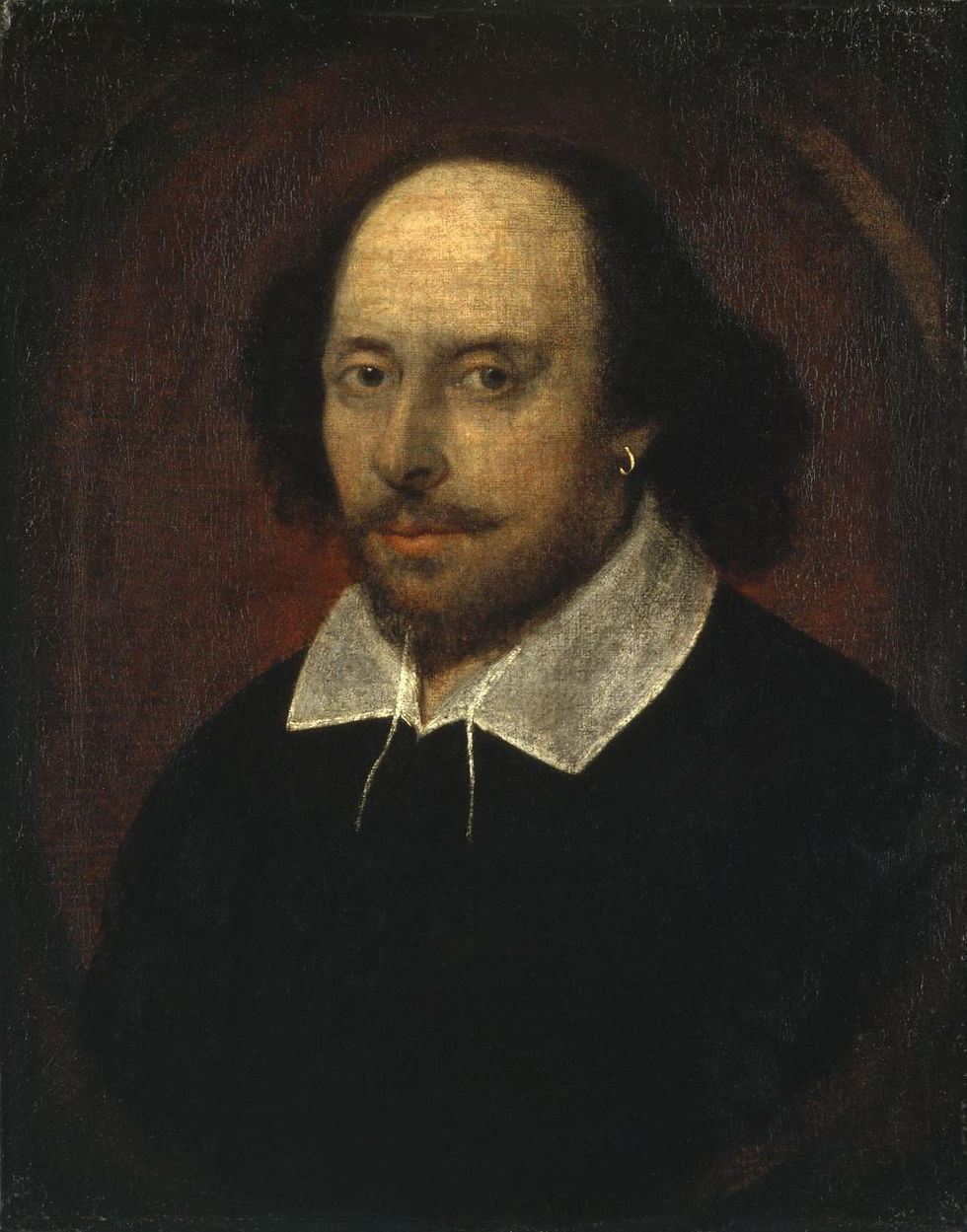
Today Shakespeare can sound terribly serious, but his plays were originally popular entertainment. They were packed with romance, murder, ghosts, sword fights, political intrigue, dirty jokes and plenty of comedy. Shakespeare wasn’t just the writer. He was also an actor and shareholder in his theatre company, the Lord Chamberlain’s Men.
When James I became king in 1603, the company received royal patronage and became the King’s Men. That helped make Shakespeare a successful businessman as well as a famous playwright.
Why Was the Globe on the South Bank?
In Shakespeare’s time, the authorities in the City of London weren’t keen on theatres. They worried about large crowds, crime, disease and what they considered the immoral behaviour associated with entertainment. The solution was to build theatres outside the City authorities’ direct control. Several appeared across the Thames in Bankside, including the Globe.
Bankside was London's entertainment district. Alongside theatres were taverns, gambling houses, brothels and bear-baiting arenas, where chained bears were attacked by dogs for entertainment. It sounds horrific today, but it attracted large crowds at the time. So don't imagine Shakespeare's audience as a room full of silent intellectuals politely studying great literature. A trip to Bankside was much more like heading to a lively entertainment district for an afternoon out.
What Was It Like to Watch a Play?
The Globe could hold thousands of people, from wealthy Londoners sitting in covered galleries to ordinary people standing in the open yard around the stage.
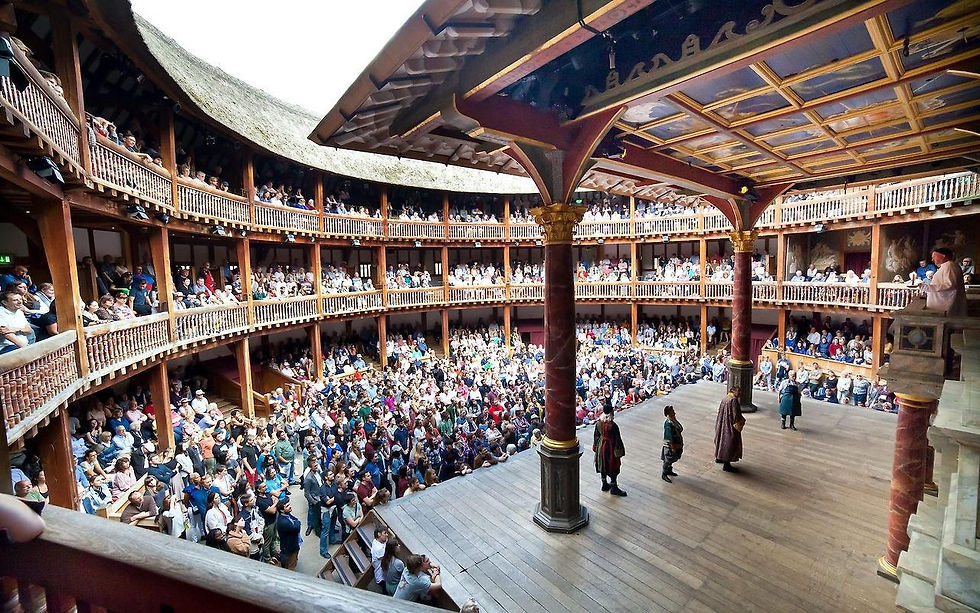
The cheapest ticket cost around one penny. These standing spectators became known as groundlings. They had no seats and no roof, so if it rained, they got wet.
Performances took place during the day because there was obviously no electric lighting. There was relatively little scenery, so Shakespeare’s words had to tell the audience whether they were standing in a castle, forest or battlefield.
Audiences could also be much noisier than modern theatre audiences. People ate, drank, talked and reacted to what was happening on stage. Shakespeare's actors had to keep the attention of a large and lively crowd.
Why Is the Globe Open to the Sky?
The original Globe was an open-air theatre, so the modern Globe follows the same basic design. The stage and seating galleries are partly protected, but the central yard is completely open to the British weather. The modern theatre also uses natural daylight for many performances, helping recreate the atmosphere of an Elizabethan playhouse.
If you buy a standing ticket and it rains, you will get wet. Umbrellas generally aren't allowed during performances because they would block everyone else's view. A raincoat is therefore a surprisingly important part of your authentic Shakespeare experience.
Where Were All the Actresses?
There weren't any. Women were not allowed to perform professionally on England's public stages during Shakespeare's lifetime. Female roles were played by boys or young men. That means Juliet, Lady Macbeth, Ophelia and Cleopatra were all originally played by male performers. Shakespeare sometimes had even more fun with this by writing female characters who disguised themselves as men. Elizabethan audiences were therefore watching a male actor playing a woman pretending to be a man. Women only began appearing regularly on the English professional stage after Charles II restored the monarchy in 1660.

The Globe Burns Down
The original Globe had a spectacularly short life.
In 1613, during a performance of Shakespeare’s Henry VIII, a small theatrical cannon was fired as a special effect. Sparks landed on the thatched roof, which caught fire, and the entire theatre burned to the ground. Remarkably, nobody is known to have died. One contemporary account even claims that a man's breeches caught fire and were extinguished by pouring a bottle of ale over them. The Globe was rebuilt the following year.

The second Globe lasted longer, but in 1642 Parliament ordered London's theatres to close during the political and religious turmoil leading into the English Civil War. The Globe was later demolished and houses were built on the site. For centuries, Shakespeare's famous theatre had effectively disappeared.
An American Brings the Globe Back
One of the best facts for American visitors is that the modern Globe exists largely because of an American actor and director called Sam Wanamaker.
Wanamaker visited London in 1949 and was surprised to find that Shakespeare's famous theatre had little more than a plaque marking its former location. He became determined to recreate it. He spent decades campaigning and raising money for the project. Archaeological discoveries and historical research helped experts work out how Elizabethan theatres had been constructed, and traditional materials and techniques were used for the reconstruction. Sadly, Wanamaker died in 1993, before he could see the completed theatre. Shakespeare’s Globe officially opened in 1997. So England's recreation of Shakespeare's most famous theatre exists largely because an American came to London and thought we weren't making enough of Shakespeare.
Yes, That Roof Is Really Thatched
The modern Globe was constructed largely using oak, with very few modern materials visible, and the roof is covered with genuine thatch. That's much more unusual in central London than you might think. After the Great Fire of London in 1666, thatched roofs were banned in the City because they were such a serious fire risk. The Globe became the first thatched-roof building permitted in central London since the Great Fire.
Fortunately, the modern roof has extensive fire protection. Given what happened in 1613, that seems sensible.
Three Things to See
The Globe Theatre
Take a tour if you can't see a performance, but seeing a play is the best way to understand the building. The actors are extremely close to the audience and the theatre feels far more intimate than its photographs suggest. Look at the stage and galleries and remember there was no microphone, electric lighting or enormous scenery. Shakespeare's actors relied heavily on their voices, costumes and the audience's imagination.
Stand With the Groundlings
If you're happy standing for the whole performance, buy a ticket for the yard. You'll be right beside the stage, just as the cheapest Elizabethan customers were. Actors sometimes move through the audience and the atmosphere can be fantastic.
Just check the weather forecast first.
Sam Wanamaker Playhouse
Take a look at the smaller indoor theatre next door. Its intimate, candlelit setting gives you a completely different experience from the open-air Globe. And remember who Sam Wanamaker was. Without this determined American, one of London's most popular historic theatres probably wouldn't exist.
Did You Know? – Shakespeare Is Still Hiding in Your Everyday English
Shakespeare's works contain some of the earliest surviving written examples of many English words and expressions. That doesn't necessarily mean he personally invented all of them—some were probably already being used in conversation—but his writing certainly helped popularise them.
Expressions associated with Shakespeare include “break the ice,” “wild-goose chase,” “heart of gold,” “in a pickle” and “all that glitters is not gold.” So even if you haven't read Shakespeare since high school, there is a good chance you're still quoting him.
Historical Highlights
1564 – William Shakespeare is born in Stratford-upon-Avon.
1599 – The original Globe Theatre opens on Bankside.
1603 – James I becomes king and Shakespeare's company becomes the King's Men.
1613 – The Globe burns down during a performance of Henry VIII.
1614 – The Globe is rebuilt.
1642 – Parliament closes London's theatres.
1640s – The Globe is demolished.
1949 – American actor Sam Wanamaker visits London and later begins campaigning for a new Globe.
1997 – The modern Shakespeare’s Globe opens.
Imagine This...
It's around 1600 and you've crossed the Thames to Bankside for an afternoon's entertainment. The streets around you are packed with taverns, theatres, gambling and bear-baiting arenas. You pay a penny to enter the Globe and stand in the open yard with hundreds of other groundlings, eating, drinking and talking while actors perform on the stage just a few feet away. There are no microphones, electric lights or elaborate sets, and the audience isn't politely sitting in silence. Perhaps you're watching Hamlet or Julius Caesar, but nobody around you knows these plays will still be performed around the world more than 400 years later. To an Elizabethan audience, Shakespeare wasn't homework—he was a great afternoon out.
Guide's Insider Tip
If you have time, see a performance rather than only taking the tour. Standing tickets in the yard can be inexpensive and give you the closest experience to being one of Shakespeare's original groundlings. If you'd rather sit down, book a gallery seat—and you may want to rent a cushion because traditional wooden benches aren't particularly forgiving.
Before or after your visit, walk along Bankside. The area that once contained theatres, taverns and bear-baiting pits is now packed with restaurants, galleries and some of London's best riverside walks.
Then walk towards Millennium Bridge. From here you can look across the Thames towards St Paul's Cathedral and see two completely different chapters of London history in one view: Shakespeare's Bankside on the south side and Christopher Wren's great cathedral on the north. And remember the weather. The Globe is genuinely open to the sky, so if you're standing in the yard and rain is forecast, bring a raincoat rather than an umbrella.
What Happened Next?
Shakespeare died in 1616, only a few years after the Globe was rebuilt. His theatre eventually disappeared, but his plays didn't. They travelled around the world and became some of the most performed works in history. Hamlet, Macbeth, Romeo and Juliet and dozens of others are still being performed more than four centuries after they were written.
Then an American called Sam Wanamaker helped bring Shakespeare and the Globe back together beside the Thames. Today you can stand in an open-air theatre, watch the actors perform only a few feet away and hear an audience laughing at jokes written more than 400 years ago. That's probably the best way to understand Shakespeare: don't just read him. Watch him.


Comments