
London’s Famous Bridges – Tower Bridge, London Bridge & the Wobbly Millennium Bridge
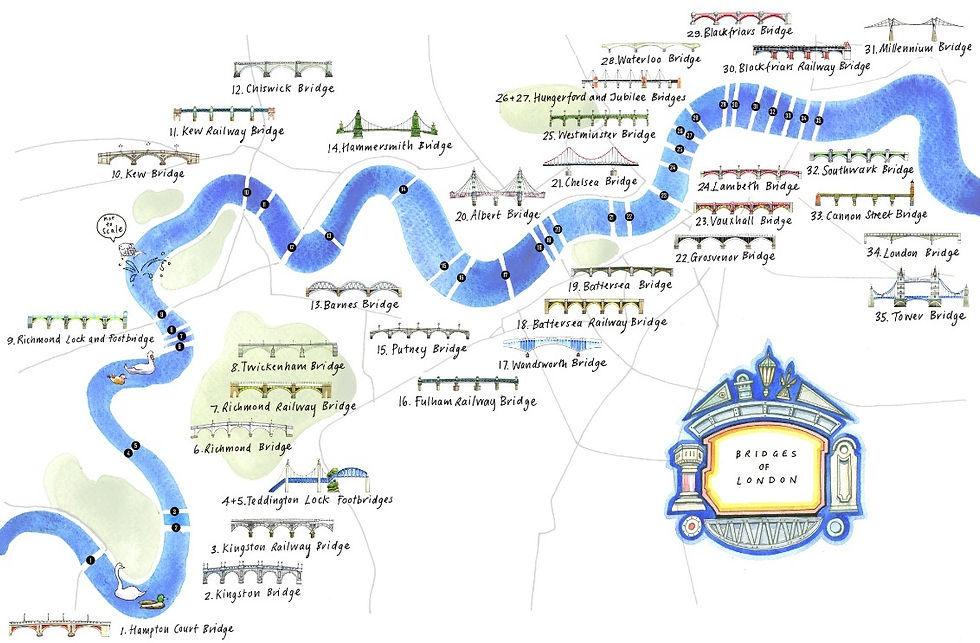
London grew around the River Thames, so its bridges have always been vital to the city. Today there are dozens of crossings, but three tell a particularly good story: the magnificent Victorian Tower Bridge, the much older story of London Bridge, and the modern Millennium Bridge connecting Shakespeare’s Globe with St Paul’s Cathedral.
Tower Bridge – The One Everyone Thinks Is London Bridge
Let's clear up the most common mistake first. This is Tower Bridge. It is NOT London Bridge.
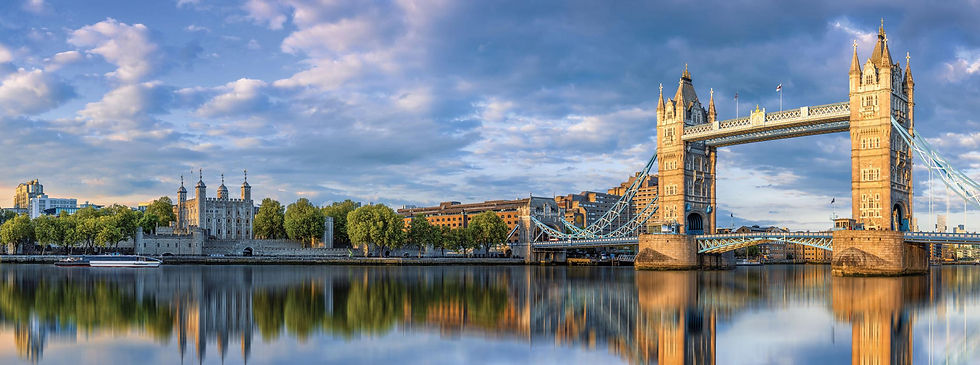
Tower Bridge is the spectacular bridge with the two Gothic-style towers beside the Tower of London. It opened in 1894 during Queen Victoria's reign and was designed to solve a very Victorian problem: London desperately needed another river crossing, but ships still needed access to the busy docks farther upstream.
The solution was ingenious. The centre of the bridge was divided into two enormous sections called bascules, which could lift upwards to allow tall ships to pass through.
And they still do. Tower Bridge opens hundreds of times a year for vessels on the Thames. Ships have to arrange an opening in advance, and pedestrians can watch from the riverbank or the bridge's high-level walkways.
Why Does Tower Bridge Look Medieval?
Tower Bridge may look like a medieval castle, but it's actually a clever piece of Victorian engineering wrapped in historical fancy dress. Underneath those stone towers is a huge steel framework. The Gothic styling was chosen partly because the bridge sits right beside the Tower of London, and its designers wanted the new industrial structure to fit its historic surroundings.
Originally, the enormous bascules were powered by steam-driven hydraulic machinery. Today they use a modern electro-hydraulic system, although you can still see some of the original Victorian machinery inside the Tower Bridge Engine Rooms. You can also walk across the glass floors in the high-level walkways, about 42 metres above the Thames, and watch traffic, boats and pedestrians passing beneath your feet.
Did You Know? – A Bus Once Jumped Tower Bridge
In 1952, a London double-decker bus was crossing Tower Bridge when the bridge began to open. The driver, Albert Gunter, realised that turning back wasn't an option. He accelerated and managed to jump the widening gap from one bascule to the other.
The bus landed safely. The passengers were shaken and some suffered minor injuries, but nobody was killed. Gunter reportedly received a small financial reward for his quick thinking. Definitely do not try this on your London vacation.
London Bridge – The Bridge With the Really Long History
Walk a little farther west and you'll reach the much less glamorous-looking London Bridge. Visitors sometimes look at it and think: “Is that it?”

But historically, London Bridge is far more important than Tower Bridge. There has been a crossing around this location since Roman times, and for centuries London Bridge was the only bridge across the Thames in central London. The famous medieval London Bridge was extraordinary. It was lined with houses, shops and businesses, making it almost like a street built across the river.

And yes, severed heads of people convicted of treason were sometimes displayed around the bridge's southern end as a warning to anyone entering London. Medieval tourism was slightly different.
London Bridge Is Falling Down...
The children's nursery rhyme “London Bridge Is Falling Down” is famous around the English-speaking world. Exactly where the rhyme came from isn't certain. Various theories connect it to Viking attacks, fires and the repeated rebuilding of London Bridge, but there isn't enough evidence to confidently say that any one of these stories is the true origin. What we do know is that London Bridge has been rebuilt many times. The medieval bridge was eventually replaced in the 19th century, and that bridge was itself replaced by the current London Bridge in the 1970s. Which brings us to one of the best London facts for American visitors...
America Bought the Old London Bridge
When the 19th-century London Bridge was replaced, the old stone bridge was actually sold to an American businessman, Robert McCulloch. It was carefully dismantled, its granite blocks numbered and shipped across the Atlantic. It was then reconstructed in Lake Havasu City, Arizona, where you can still see it today.
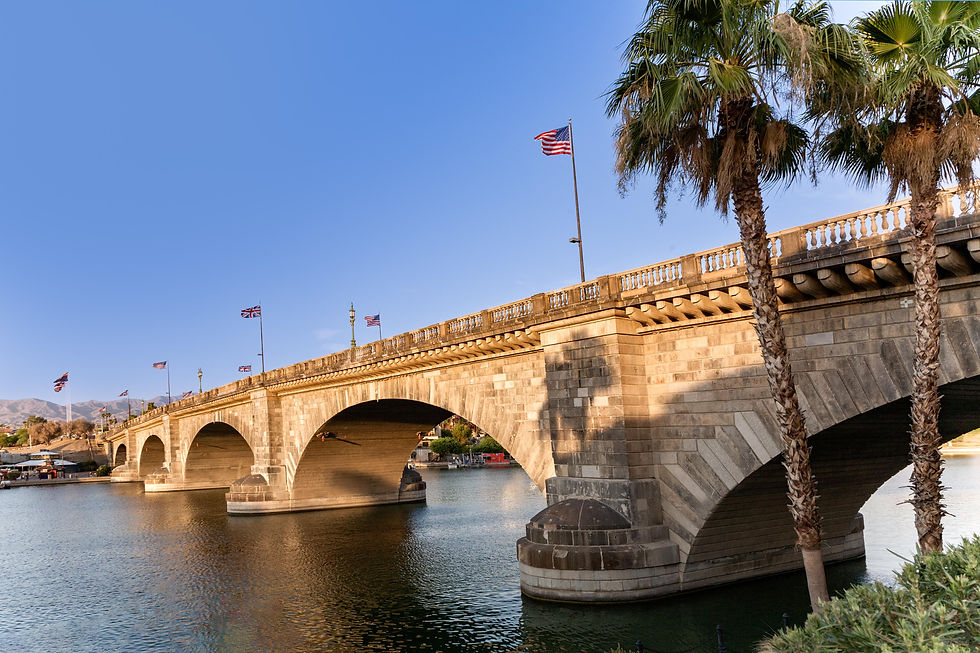
There's a popular story that McCulloch thought he was buying Tower Bridge. It's a brilliant story. Unfortunately, there's no good evidence that it's true. McCulloch knew what he was buying. So if someone says , “Didn't some American accidentally buy the wrong bridge?” you can tell them: America really did buy London Bridge. They just didn't buy it by mistake.
Millennium Bridge – The Wobbly Bridge
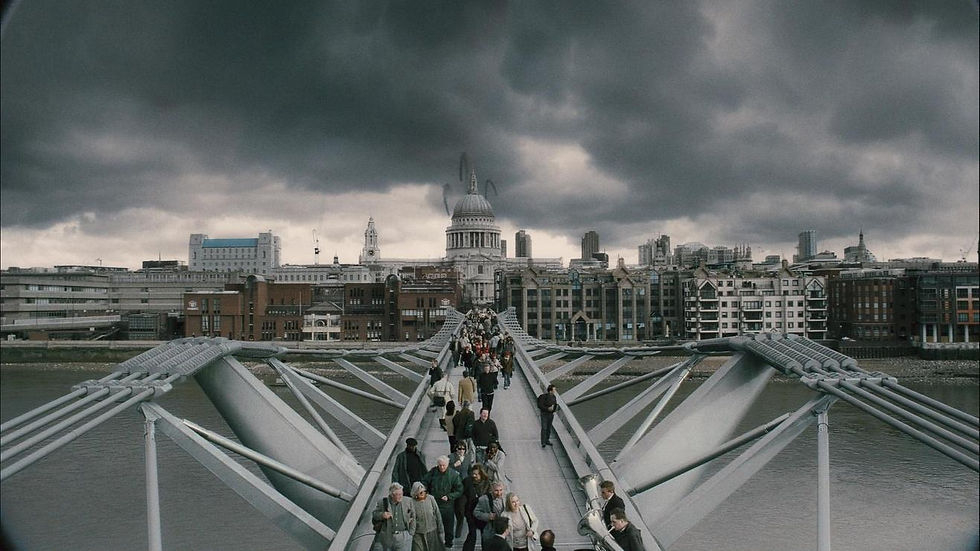
Continue west along the Thames and eventually you'll reach a completely different London. The sleek Millennium Bridge is a pedestrian bridge connecting the area around Tate Modern and Shakespeare's Globe on the South Bank with the City of London and St Paul's Cathedral on the north side.
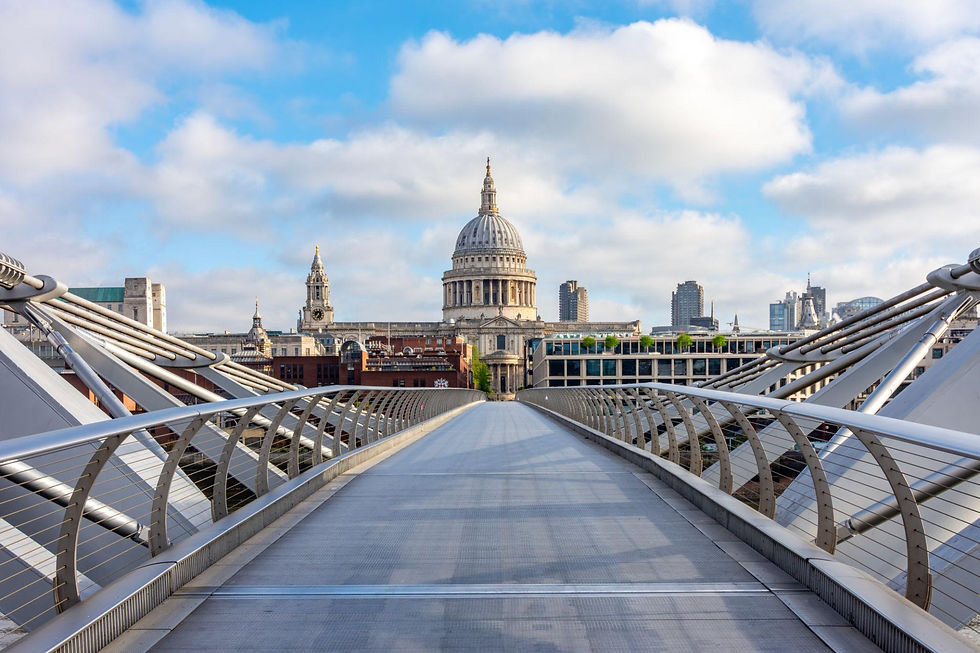
It opened in June 2000 as part of London's millennium celebrations. And almost immediately there was a problem. It wobbled.
As thousands of people crossed on opening day, the bridge began moving from side to side. Pedestrians unconsciously adjusted their footsteps to the movement, which caused people to synchronise with one another and made the movement worse. The bridge was closed just two days after opening. Engineers installed dampers to control the movement, and it successfully reopened in 2002. But Londoners had already given it a nickname: The Wobbly Bridge.
From Shakespeare to St Paul’s
One of the best things about Millennium Bridge is its location. Stand on the South Bank and behind you are Shakespeare's Globe and Tate Modern. Walk across the bridge and Wren's enormous St Paul's Cathedral appears directly ahead. It's a wonderful little journey through London history. You move from Shakespeare's Elizabethan London, across a bridge built for the year 2000, towards a cathedral rebuilt after the Great Fire of 1666. And you can do the whole thing in a few minutes.
The Secret Chewing Gum Art
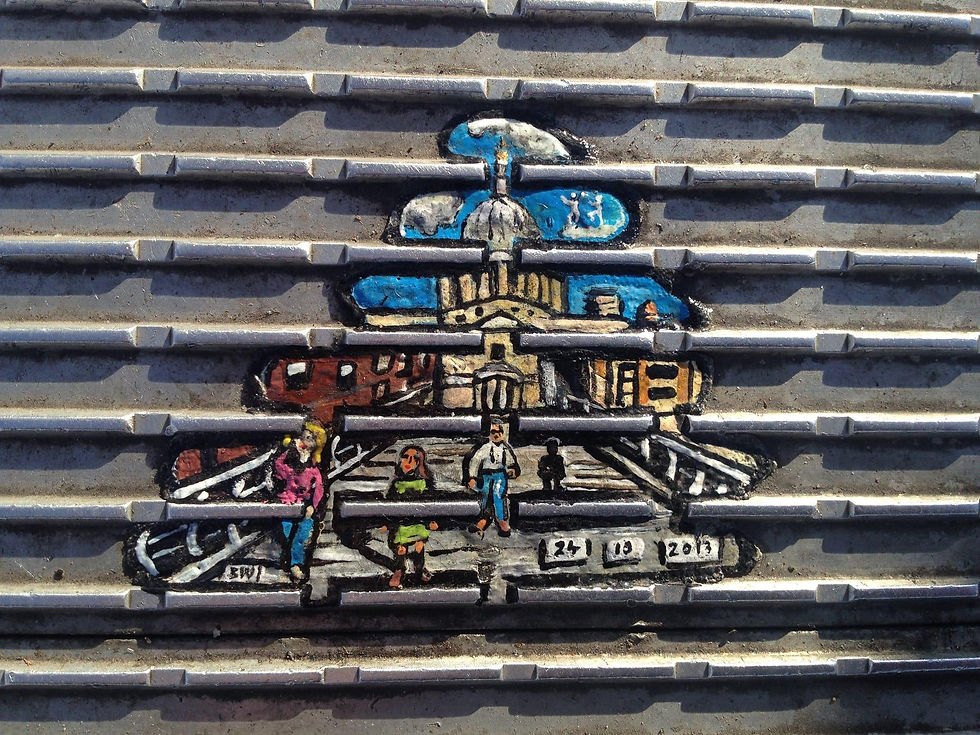
Look down as you walk across the Millennium Bridge and you'll spot tiny, brightly coloured paintings hidden beneath your feet. They are painted on pieces of discarded chewing gum by London artist Ben Wilson, better known as the “Chewing Gum Man.”
Wilson has been turning squashed chewing gum into miniature works of art for more than 20 years, with his famous trails across Millennium Bridge dating back to the early 2010s. Rather than adding graffiti directly to the bridge, he paints on the gum that other people have already spat out, turning litter into tiny pieces of street art. The paintings can be incredibly detailed and often have personal stories behind them. People stop to talk to Wilson and request pictures celebrating birthdays, weddings, marriage proposals, loved ones who have died and other special memories. He works with tiny brushes, acrylic enamel and lacquer to create them.
At one point there were around 600 of his miniature paintings on the Millennium Bridge, although many were removed when the bridge underwent maintenance and deep cleaning in 2023; some were preserved after discussions with the bridge authorities.

Harry Potter Destroyed the Millennium Bridge
Harry Potter fans may recognise Millennium Bridge from Harry Potter and the Half-Blood Prince. In the movie, Death Eaters attack London and the bridge twists dramatically before collapsing into the Thames. Obviously, that didn't really happen. The bridge's actual wobbling problem was embarrassing enough.
Three Things to See
Tower Bridge Exhibition
Don't just photograph Tower Bridge from outside. You can go inside the towers and across the high-level walkways, including the glass floor looking down onto the road and Thames below. You can also visit the Engine Rooms to see the Victorian machinery that originally powered the bridge.
Old London Bridge – In Arizona!
You can't see medieval London Bridge anymore, but the 19th-century bridge that replaced it really is standing in Lake Havasu City, Arizona. For American visitors, it's one of the strangest physical connections between London and the United States.
Millennium Bridge & St Paul’s View
Walk north across Millennium Bridge towards St Paul's Cathedral. This is one of the best free views in central London. The bridge creates a wonderful approach to Wren's dome, so keep looking ahead as you cross.
Historical Highlights
Roman period – A bridge crosses the Thames around the location of London Bridge.
1209 – The famous medieval stone London Bridge is completed.
1831 – A new London Bridge replaces the medieval bridge.
1894 – Tower Bridge opens.
1960s – The 19th-century London Bridge is sold to Robert McCulloch.
1971 – The reconstructed London Bridge opens in Arizona.
1973 – The current London Bridge opens.
2000 – Millennium Bridge opens... and wobbles.
2002 – Millennium Bridge reopens after engineers fix the problem.
Imagine This...
Imagine travelling along the Thames through different periods of London's history. At London Bridge in the Middle Ages you'd see a crowded stone bridge covered in houses and shops, with boats squeezing through the river arches below. By the late Victorian period you'd arrive at the newly built Tower Bridge, where enormous steam-powered machinery raised the roadway to let ships through to London's docks. Then jump forward to 2000 and London unveils its sleek new Millennium Bridge, only to close it two days later because thousands of pedestrians have made it wobble. London's bridges aren't just ways of crossing the Thames—they're snapshots of how the city has changed over nearly 2,000 years.
Guide’s Insider Tip
For the best photograph of Tower Bridge, don't stand too close to it. Walk along the river beside the Tower of London or cross to the south side of the Thames so you can get both towers into the shot.
When you reach London Bridge, don't be disappointed by its appearance. The current bridge isn't particularly exciting—the history underneath your feet is the interesting part. You're crossing the Thames close to where Londoners have been crossing the river since Roman times.
Finally, walk across Millennium Bridge from south to north if you can. That direction gives you the best experience because St Paul's Cathedral sits directly ahead of you as you cross.
So if you only remember three things:
Tower Bridge – the beautiful one that opens.
London Bridge – the historic one America bought.
Millennium Bridge – the modern one that wobbled.


Comments