
The Tower of London and Crown Jewels - 1000 Years of Kings, Prisoners, Executions and Treasure
What Is the Tower of London?
The Tower of London is one of those places where almost the entire story of the British monarchy seems to collide in one building. It has been a fortress, royal palace, prison, armoury, treasury, mint, zoo and execution site—and today it is home to the spectacular Crown Jewels.

The story begins with William the Conqueror. After conquering England in 1066, William needed to control London and remind its inhabitants exactly who was now in charge. He ordered the construction of a huge stone fortress beside the River Thames.
At its centre was the White Tower, begun in the 1070s. Almost 1,000 years later, it is still standing. Over the centuries, later monarchs surrounded it with walls, towers and a moat, creating the enormous fortress we see today. And despite the name, the Tower of London isn't one tower. It's an entire castle complex containing more than 20 towers.

Why Build It Beside the Thames?
Location, location, location.
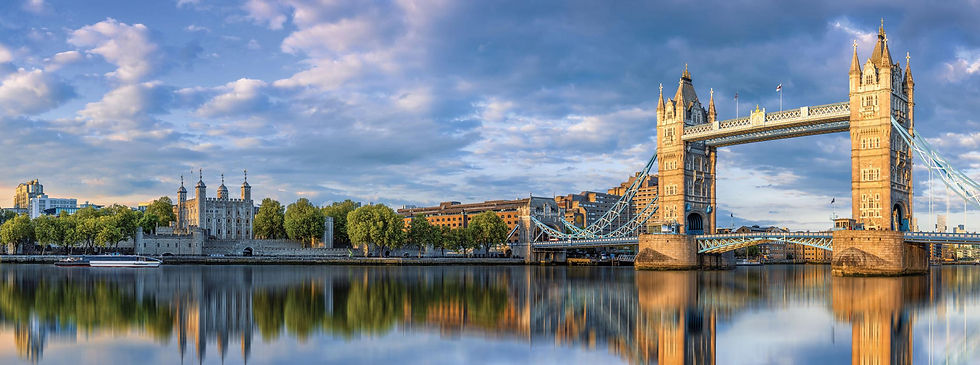
The Thames was London's great highway. Building a fortress beside the river allowed William to control an important route into the city, move people and supplies by water and make an enormous statement of royal power.
Imagine being an Anglo-Saxon Londoner shortly after the Norman Conquest and watching this massive stone fortress rising above you. That was partly the point. The White Tower wasn't just defensive. It was saying: “There's a new king in town.”
Was the Tower Really a Royal Palace?
Yes—and this is often forgotten. Before we associate the Tower with prisoners and executions, it was an important royal residence. Medieval kings and queens stayed here, and monarchs traditionally came to the Tower before their coronations. They would then process from the Tower through London towards Westminster. Parts of the medieval royal apartments still survive. So when you visit, don't imagine everyone arriving in chains. Some people arrived wearing crowns.
The Tower Becomes a Prison
Eventually the Tower developed its much darker reputation. Because it was secure and controlled by the Crown, it became the perfect place to imprison political enemies, rebellious nobles and people accused of treason. But being “sent to the Tower” didn't automatically mean you were going to be executed. Some prisoners were released, and wealthy prisoners could live surprisingly comfortably, bringing servants, furniture and even their own food.
Others weren't so lucky. Some of the most famous names in British history passed through these gates, including Anne Boleyn, Catherine Howard, Lady Jane Grey, Sir Walter Raleigh and the future Elizabeth I.
Henry VIII, Anne Boleyn and the Tower
If there's one monarch everyone associates with the Tower, it's Henry VIII. His second wife Anne Boleyn had actually stayed at the Tower before her coronation in 1533.

Three years later, she returned as a prisoner. Anne was accused of adultery, incest and treason. Modern historians generally regard much of the case against her as highly questionable, but Henry wanted the marriage ended and Anne was convicted.
On 19 May 1536, she was executed inside the Tower. Henry gave her the unusual privilege of being beheaded with a sword rather than an axe, and a specialist swordsman was brought from France. Anne was buried in the nearby Chapel Royal of St Peter ad Vincula. Five years later, Henry's fifth wife Catherine Howard was executed at the Tower too. Not exactly the happiest place to be one of Henry VIII's wives.
Were Loads of People Executed Inside the Tower?
Surprisingly, no. The Tower has a terrifying reputation, but most public executions took place elsewhere, particularly on Tower Hill, just outside the fortress.
Execution inside the Tower was relatively unusual and generally reserved for people of very high status because it allowed them to die away from enormous public crowds. Anne Boleyn, Catherine Howard and Lady Jane Grey were among those executed within the Tower walls. Today you'll find a memorial on Tower Green commemorating those who died there.
The Princes in the Tower
And then we get one of Britain's greatest royal mysteries. In 1483, the 12-year-old Edward V and his younger brother Richard were placed in the Tower while preparations were supposedly being made for Edward's coronation. Their uncle then became Richard III. The boys disappeared. Nobody knows for certain what happened to them.
The traditional accusation is that Richard III had his nephews murdered so they couldn't challenge his claim to the throne. But no conclusive evidence has ever proved exactly who was responsible. Nearly 200 years later, workmen at the Tower discovered the bones of two children beneath a staircase. Were they the missing princes? Possibly. They were eventually buried in Westminster Abbey, but the mystery has never been conclusively solved.
Traitors' Gate – The Entrance Nobody Wanted to Use
One of the Tower's most atmospheric spots is Traitors' Gate, the water entrance from the Thames. Prisoners could be brought to the Tower by boat rather than through London's crowded streets. The name is irresistible, although it became known as Traitors' Gate later in its history. Imagine approaching the fortress from the river, passing beneath the stone arch and knowing you were entering as a prisoner of the Crown. Some of those prisoners would never come back out.

The Ravens – Can They Really Never Leave?
Then we have the Tower's most famous residents: the ravens. According to legend, if the ravens ever leave the Tower, the kingdom and the Tower itself will fall. So nobody is taking any chances.

At least six ravens are traditionally kept at the Tower under the care of the Ravenmaster, one of the Yeoman Warders. The legend is often linked to Charles II, although the story in its familiar form appears to be much more recent than people sometimes claim. The ravens are intelligent, mischievous birds and each has its own personality. The monarchy may be constitutional. The ravens apparently aren't negotiable.
Who Are the Beefeaters?
The ceremonial guards you'll see around the Tower are officially called Yeoman Warders, although almost everyone knows them as Beefeaters. They aren't actors dressed up for tourists.

To qualify, Yeoman Warders must have completed at least 22 years of military service and achieved a distinguished service record. They live within the Tower community and conduct the famous guided tours. If you take one tour here, take theirs. The Tower's history is full of murder, betrayal, executions and royal scandal, and the Yeoman Warders know how to tell it. And why “Beefeater”? Nobody knows for certain, although the nickname may relate to the generous meat allowance traditionally given to royal guards.
And Then There Are the Crown Jewels...
The Tower is home to one of the greatest collections of royal regalia in the world: the Crown Jewels.

These aren't simply expensive jewellery. They are working ceremonial objects used during coronations and other important royal occasions. The collection includes crowns, sceptres, orbs, swords and other objects associated with the monarchy. And yes—the jewels you see are real.
Why Aren't the Crown Jewels Much Older?
Here's the fascinating bit. England had medieval Crown Jewels, but most were destroyed after Charles I was executed in 1649. The monarchy had been abolished, and the new republican government ordered royal regalia to be broken up, melted down or sold. Then Charles II returned to the throne in 1660. Slight problem: King restored. Crown missing. A new collection of coronation regalia therefore had to be created for Charles II's coronation in 1661. Much of the core collection you see today dates from that restoration of the monarchy.
St Edward's Crown – The Coronation Crown
The most important crown is St Edward's Crown.

This is the magnificent solid-gold crown used at the actual moment of coronation. It was made for Charles II in 1661, replacing the medieval crown destroyed after the Civil War.
Queen Elizabeth II was crowned with it in 1953. King Charles III was crowned with it in 2023. It weighs more than 2 kilograms—nearly 5 pounds. So when the Archbishop of Canterbury places it on the monarch's head, this isn't a lightweight theatrical prop. It's a serious piece of headgear.
The Imperial State Crown
The crown you're more likely to recognise is the Imperial State Crown.

This is the crown traditionally worn by the monarch when leaving Westminster Abbey after the coronation and used for important state occasions. It contains some extraordinary stones, including the Cullinan II diamond and the Black Prince's Ruby—which, confusingly, isn't actually a ruby at all. It's a red spinel. The Crown Jewels apparently come with geological plot twists.
The World's Largest Cut Diamond
The collection also contains the enormous Cullinan I, or Great Star of Africa.

It weighs more than 530 carats and is mounted in the Sovereign's Sceptre with Cross. The original Cullinan diamond was discovered in South Africa in 1905 and was the largest gem-quality rough diamond ever found at the time. It was eventually cut into several major stones. The history of these diamonds also connects the Crown Jewels directly to Britain's imperial past, and debates continue today about colonialism, ownership and how such objects should be interpreted.
Three Things to See
The White Tower
This is the heart of William the Conqueror's original fortress and one of the oldest surviving parts of the complex. Inside you'll find the Line of Kings and an extraordinary collection of historic armour, including armour associated with Henry VIII. Looking at Henry's increasingly enormous suits of armour is also a rather effective visual biography of his waistline.
The Crown Jewels
Look particularly for St Edward's Crown, the Imperial State Crown and the Sovereign's Sceptre containing the Cullinan I diamond. These aren't museum pieces that have completely retired from royal life. Charles III used the coronation regalia in 2023. You are looking at objects that are still part of the functioning British monarchy.
Tower Green & St Peter ad Vincula
Tower Green is where some of the Tower's most famous executions took place. Nearby stands the little Chapel Royal of St Peter ad Vincula, where several famous Tower prisoners are buried. Among them are Anne Boleyn, Catherine Howard and Lady Jane Grey. After all the crowns, armour and enormous stone walls, this small chapel is one of the places where the Tower's history suddenly becomes very human.

Did You Know? – Someone Actually Tried to Steal the Crown Jewels
In 1671, a man named Colonel Thomas Blood attempted one of the cheekiest robberies in British history. Blood and his accomplices gained access to the Crown Jewels, attacked their elderly keeper and attempted to escape with the regalia. They even flattened St Edward's Crown with a mallet to make it easier to hide. They were caught. You'd expect the story to end with Blood losing his head. Instead, Charles II met him—and astonishingly pardoned him. Blood was even given land in Ireland. Why? Nobody knows for certain. Apparently trying to steal the Crown Jewels can either get you executed or a royal audience.
A Mint, a Zoo... What Didn't They Keep Here?
The Tower wasn't just a palace and prison. For hundreds of years it was also home to the Royal Mint, where England's coins were made. The Mint operated at the Tower from the late 13th century until 1810, making this one of the most secure places in the country for producing and storing money. One particularly famous employee was Sir Isaac Newton—yes, the gravity and apple man—who became Master of the Mint and took the job of catching counterfeiters extremely seriously.
Even more surprisingly, the Tower once had its own Royal Menagerie—basically a private royal zoo. Medieval kings were given exotic animals as diplomatic gifts, including lions, leopards, an elephant and even a polar bear. Henry III's polar bear was apparently allowed to swim and catch fish in the Thames while attached to a long chain. Imagine seeing that on your morning commute.

By the 1800s, keeping exotic animals inside a medieval fortress was beginning to look like a rather bad idea. The surviving animals were eventually transferred to the newly established London Zoo in Regent's Park in the 1830s. Today you'll see wonderful wire animal sculptures around the Tower, marking some of the places where the royal animals were once kept.
Historical Highlights
1066 – William the Conqueror takes England.
1070s – Construction of the White Tower begins.
1483 – The Princes in the Tower disappear.
1536 – Anne Boleyn is executed.
1542 – Catherine Howard is executed.
1553–54 – Lady Jane Grey is imprisoned and executed.
1603 – Elizabeth I's reign ends; by this period the Tower's role as a royal palace is declining.
1649 – Charles I is executed and the old Crown Jewels are largely destroyed.
1661 – New coronation regalia are created for Charles II.
1671 – Thomas Blood attempts to steal the Crown Jewels.
1953 – Elizabeth II uses the regalia at her coronation.
2023 – Charles III is crowned using St Edward's Crown.
Imagine This...
It's May 1536 and Anne Boleyn is back inside the Tower of London. Just three years earlier she stayed here in triumph before processing through London for her coronation as Henry VIII's new queen. Now everything has reversed. She is a prisoner accused of betraying the king, while the husband who once changed England's religion partly so he could marry her is preparing to marry someone else. Anne walks onto Tower Green, kneels before a French swordsman and is executed. Nearly 500 years later, visitors still walk across the same fortress, past the chapel where she lies buried and onwards to see the crowns worn by the monarchs who came after her. That is what makes the Tower extraordinary: almost 1,000 years of royal triumph, ambition, imprisonment and death are piled on top of one another inside the same walls.
Guide's Insider Tip
Go early. The Crown Jewels are one of the Tower's biggest attractions, and queues can build quickly. If they're high on your list, head there soon after arriving rather than leaving them until the end.
Then take a Yeoman Warder tour. The Beefeaters aren't simply there for colourful photographs—they are experienced former members of the Armed Forces, and their stories are one of the best ways to make sense of a site containing almost a millennium of history.
Finally, don't rush straight from the Crown Jewels to the exit. Spend a few quiet minutes around Tower Green and St Peter ad Vincula. This is where names you've heard throughout London's royal history—Anne Boleyn, Catherine Howard, Lady Jane Grey—stop feeling like characters in a history book. And when you leave, walk down towards the Thames and look back at the Tower from Tower Bridge or the riverfront. It's the best way to appreciate why William the Conqueror put his fortress exactly here.
What Happened Next?
The Tower gradually stopped being one of the monarch's principal residences, and by the modern period its role had completely changed. Kings and queens moved on to palaces such as Whitehall, Hampton Court, St James's, Kensington and eventually Buckingham Palace. The Tower survived. Today it is a UNESCO World Heritage Site and one of Britain's most famous historic attractions, while the Crown Jewels remain guarded inside a fortress begun by William the Conqueror almost a thousand years ago.
And that's perhaps the most extraordinary thing about it.
The monarchy has changed beyond recognition. The Crown Jewels have been destroyed and recreated. Kings have been executed, dynasties have disappeared and Britain has gone from medieval kingdom to global empire to modern democracy.
But the White Tower is still standing beside the Thames.


Comments