
James I (1603–1625) – The Gunpowder Plot and the King James Bible
- Belinda Hath
- Aug 3
- 8 min read
Who Was James I?
James I was the man who followed Elizabeth I onto the English throne—and with him came an entirely new royal family. The Tudors were out and the Stuarts were in.

But James wasn't new to being a king. He had already been James VI of Scotland for almost his entire life. His mother was Mary, Queen of Scots—the same Mary whom Elizabeth I had kept prisoner for nearly 19 years and eventually executed.
When Elizabeth died without children in 1603, the English crown passed to the son of one of her greatest rivals. James VI of Scotland travelled south and became James I of England.
For the first time, England and Scotland had the same monarch. But here's the important bit: they were not yet one country. They still had separate parliaments, laws and governments. James liked the idea of calling himself King of Great Britain, but the politicians weren't quite ready for that. England and Scotland wouldn't officially unite until 1707.
Then Someone Tried to Blow Him Up
Just two years into James's English reign came one of the most famous attempted assassinations in British history: the Gunpowder Plot.

England was still bitterly divided by religion. Catholics had hoped that James might treat them more tolerantly than Elizabeth had. When those hopes faded, a small group of Catholic conspirators came up with an extraordinary solution. They would blow up Parliament—with the king inside it.
The plotters obtained a cellar beneath the House of Lords and filled it with barrels of gunpowder. The plan was to detonate them during the State Opening of Parliament, when James, members of the royal family, bishops, nobles and much of England's political establishment would all be gathered together.
If it had worked, one enormous explosion could have wiped out much of England's ruling class.
Guy Fawkes Wasn't Actually the Mastermind
Everyone remembers Guy Fawkes, but here's the interesting part: he wasn't actually the leader of the Gunpowder Plot. That was Robert Catesby.
Fawkes had spent years fighting as a soldier on the Continent and knew how to handle explosives, so he was given the rather important job of guarding the gunpowder and lighting the fuse.
The plot began to unravel after an anonymous letter warned the Catholic Lord Monteagle to stay away from Parliament. Searches were ordered, and late on the night of 4 November 1605, officials discovered Fawkes beneath the Palace of Westminster.
Nearby were barrels of gunpowder. It was not an easy situation to explain away.
Remember, Remember the Fifth of November
Fawkes was arrested and interrogated. James personally authorised the use of torture, and eventually Fawkes revealed the names of his fellow conspirators. Several plotters were killed while resisting capture; the survivors were tried for treason and brutally executed.
The discovery of the plot was celebrated with bonfires, and 5 November became an annual day of thanksgiving. More than four centuries later, Britain still marks Bonfire Night with fireworks and bonfires. British children have grown up with the rhyme:
“Remember, remember the fifth of November. Gunpowder, treason and plot.”
So what now looks like a cheerful autumn evening of fireworks, sparklers and hot drinks
actually commemorates the failure of a plot to blow up the king and Parliament.
The King James Bible
Yet James's most important legacy may have nothing to do with gunpowder. It involves a book.
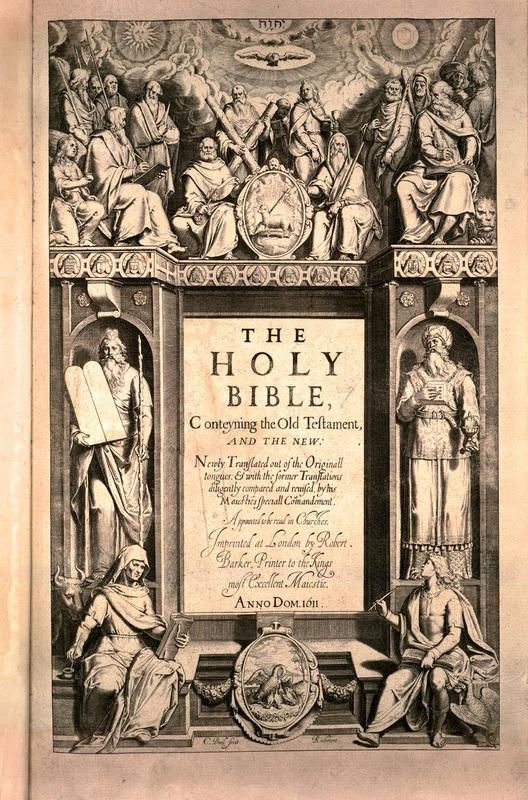
James approved a new English translation of the Bible, produced by teams of scholars and published in 1611. It became known as the King James Bible, or King James Version.
Its influence was enormous. For generations it was read aloud in churches and homes across the English-speaking world, and its language had a profound influence on English literature and culture.
There is a nice irony here. James is nowhere near as famous today as Elizabeth I, Henry VIII or Queen Victoria, yet his name remains attached to one of the most famous books ever published in the English language.
James Was Fascinated by Witches
James had another rather less comfortable obsession: witchcraft.
He genuinely believed witches could make agreements with the Devil, summon spirits and use magic to harm people. He became so interested in the subject that he wrote a book called Daemonologie, explaining his ideas about witchcraft, demons and supernatural forces.
His fascination had begun while he was still King of Scotland. Following his marriage to Anne of Denmark, James became personally involved in notorious Scottish witch trials in which people were accused of using witchcraft to create storms and attempting to kill the king.
Belief in witchcraft was widespread at the time, so James wasn't unusual in believing it. What was unusual was having a king who was so fascinated by it that he wrote a book on the subject.
And that brings us to Shakespeare.
Shakespeare Gets a New Boss
William Shakespeare had flourished during Elizabeth's reign, but the arrival of James was very good news for him.
James took Shakespeare's acting company under royal patronage, and they became known as The King's Men. Shakespeare was no longer simply entertaining London audiences—his company now had the king's name attached to it.
And then Shakespeare wrote Macbeth.
Think about the ingredients: Scotland, kings, murder, treason and witches. James was a Scottish king with a fascination for witchcraft and a very strong interest in the idea of legitimate kingship.
Shakespeare certainly knew his audience.
A King Who Hated Smoking
James also had very strong opinions about a fashionable new habit arriving from the Americas: smoking. He hated it.
In 1604 he published A Counterblaste to Tobacco, attacking tobacco and the people who smoked it. He complained about its smell and its effects on the body and described smoking in wonderfully furious terms.
More than 400 years ago, England essentially had a king telling everyone that smoking was disgusting. On this particular subject, James sounds surprisingly modern.
James Believed Kings Were Chosen by God
James was highly educated and loved debating politics, religion and philosophy. Unfortunately, he also had very firm ideas about his own importance. He believed strongly in the Divine Right of Kings—the idea that a monarch received his authority from God. A king wasn't simply another politician. His authority was sacred.
Parliament didn't always agree.
James repeatedly argued with MPs about money, taxation and royal power. During his lifetime those disagreements remained manageable, but the big question wasn't going away: who ultimately controlled England—the king or Parliament?
James's son Charles would inherit that argument. And he would handle it spectacularly badly!
Three Things to See
Banqueting House, Whitehall
The magnificent Banqueting House in Whitehall was commissioned during James's reign and designed by Inigo Jones. James and his queen, Anne of Denmark, loved elaborate court entertainments known as masques—extravagant combinations of theatre, music, dance, spectacular costumes and scenery.
The present Banqueting House was completed in 1622 and is the great surviving reminder of the enormous Palace of Whitehall that once stood here.
There's also a wonderful connection to our next king. James's son Charles I would eventually walk through Banqueting House on his way to his own execution outside it.
Royal history doesn't get much more dramatic than that.
Houses of Parliament
The Houses of Parliament you see today are much later, but the site is forever associated with Guy Fawkes and the Gunpowder Plot.
When you're standing in Parliament Square looking towards the Palace of Westminster, imagine what was supposed to happen here. Somewhere beneath the old palace, Fawkes waited with enough gunpowder to kill the king and much of England's political establishment.
The plot failed—but Britain is still setting off fireworks every November because of it.
Westminster Abbey
James is buried in Westminster Abbey, but one of the most interesting things he did there concerns his mother. Mary, Queen of Scots had originally been buried at Peterborough Cathedral after Elizabeth I ordered her execution. Once Mary's son was King of England, James had his mother's body moved to Westminster Abbey and gave her a magnificent tomb.
So today Elizabeth I and Mary, Queen of Scots lie only a short distance apart—the queen who signed Mary's death warrant and the woman whose son eventually inherited Elizabeth's throne.
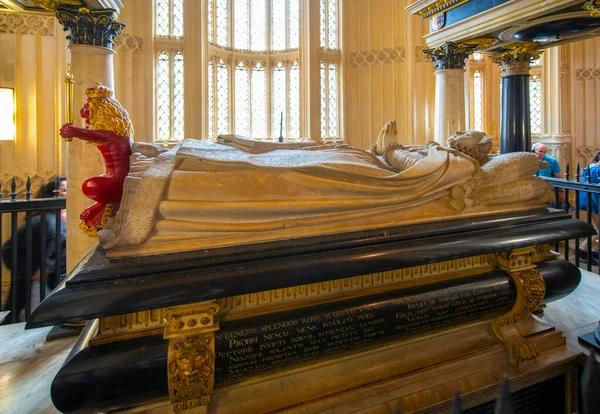
Even better, James himself was eventually buried in the Abbey too.
It's essentially a royal family drama written in stone.
Did You Know? – James Was Terrified of Assassination
Given that his father had been murdered before James was even born, his mother had been forced from her throne, and James himself had been kidnapped during his youth, perhaps it isn't surprising that he grew up acutely aware that being a king could be dangerous.
Then, only two years after arriving in England, he discovered that a group of conspirators had apparently accumulated enough gunpowder beneath Parliament to blow him sky-high.
James survived the Gunpowder Plot, but there is another wonderful detail about the night Guy Fawkes was caught. When James examined the anonymous warning letter that had helped expose the plot, he reportedly focused on the words about receiving a “terrible blow” and suspected that explosives might be involved. For once, royal paranoia proved rather useful.
Historical Highlights
1566 – James is born in Scotland, son of Mary, Queen of Scots.
1567 – He becomes James VI of Scotland while still a baby.
1587 – His mother, Mary, Queen of Scots, is executed by Elizabeth I.
1603 – Elizabeth dies and James becomes James I of England.
1605 – The Gunpowder Plot is discovered and Guy Fawkes is arrested.
1611 – The King James Bible is published.
1612 – Mary, Queen of Scots is reburied at Westminster Abbey.
1622 – Inigo Jones's Banqueting House is completed.
1625 – James dies and his son Charles I becomes king.
Imagine This...
It’s the night of 4 November 1605. London is dark, and the following day the king is expected at Parliament. Beneath the Palace of Westminster, Guy Fawkes is waiting near barrels of gunpowder. The plan is simple and horrifying: when James and the country’s most powerful people gather above, the gunpowder will be detonated, killing the king and much of England’s ruling class in one enormous explosion. Then officials arrive and search the cellar. They find Fawkes, and then they discover the gunpowder. The plot has failed. More than four centuries later, fireworks still explode across Britain every November because of what happened that night.
Guide's Insider Tip
When you’re exploring Westminster, it’s easy to walk past the Banqueting House on Whitehall without realising just how much royal history is packed into this elegant building. Take a moment to look up at the magnificent ceiling paintings by Rubens, which celebrate James I and the Stuart monarchy.
Then, when you step back outside, remember this spot for the next chapter in our story. James’s son, Charles I, would later walk through the Banqueting House on the way to his execution on a scaffold outside.
From here, continue towards Parliament and think back to the Gunpowder Plot. The Palace of Westminster you see today is much later, but this is where Guy Fawkes and his fellow conspirators planned to blow up James and Parliament in 1605.
Finally, head into Westminster Abbey to find the tomb of James’s mother, Mary, Queen of Scots. Her magnificent monument is particularly fascinating when you remember that Elizabeth I—the queen who ordered her execution—is buried just a short distance away. Mary lost her head and her throne, but her son ultimately inherited Elizabeth’s crown.
What Happened Next?
James died in 1625 and his son became Charles I.
James had spent years arguing with Parliament about money and the power of the monarchy, but somehow he had always managed to keep the relationship going.
Charles wouldn't.
The arguments would become increasingly bitter. Parliament and king would turn against one another. England would descend into civil war and, eventually, something almost unimaginable would happen. The king himself would be put on trial for treason. And on a freezing January day in London, Charles I would step through Banqueting House and onto a scaffold erected outside.


Comments