
Henry VIII (1509–1547) – Six Wives and the Break with Rome
- Belinda Hath
- Aug 2
- 6 min read
Who Was Henry VIII?
Henry VIII is probably the most famous king in English history.

We remember the enormous king with six wives, extravagant clothes and a fearsome temper. But the young Henry who inherited the throne in 1509, aged just 17, was very different.

He was tall, athletic, handsome and highly educated. He loved jousting, hunting, music, dancing and parties and was considered one of the most glamorous princes in Europe.
Henry had never expected to be king. His older brother Arthur had been heir to the throne until his sudden death aged just 15.
Henry inherited not only Arthur's place in the succession but eventually something else too: Arthur's widow, Catherine of Aragon. That marriage would ultimately change England forever.
Six Wives – But Why?

Henry's obsession wasn't simply with getting married. It was with producing a legitimate son. The Tudor dynasty was still relatively new, and Henry feared that without a male heir England could once again descend into a struggle for the throne. His six wives are famously remembered with the rhyme: Divorced, beheaded, died; divorced, beheaded, survived.
More accurately, two marriages were annulled rather than modern divorces, but the rhyme is certainly easier to remember!
Catherine of Aragon – Divorced
Catherine had originally married Henry's older brother Arthur. After Arthur died, she married Henry and remained his wife for more than 20 years. Catherine became pregnant several times, but only one child survived infancy: Mary, the future Mary I.
As Catherine grew older, Henry became increasingly desperate for a son. And then he fell in love with Anne Boleyn.
Anne Boleyn – Beheaded
Anne refused to simply become Henry's mistress. She wanted to be queen. But the Pope would not allow Henry to end his marriage to Catherine. Henry's solution was extraordinary. If the Pope wouldn't give him what he wanted, Henry would remove the Pope's authority in England. Anne also became pregnant several times, bon tonly one child survived infancy: Elizabeth, the future Elizabeth I.
Jane Seymour – Died
Jane finally gave Henry what he had wanted for decades: a son. The future Edward VI was born in 1537. But Jane died shortly after childbirth. Henry later described her as his "true wife" and chose to be buried beside her.
Anne of Cleves – Divorced
Henry agreed to marry the German princess after seeing a portrait of her by Hans Holbein. When Anne arrived in England, Henry was disappointed. The marriage lasted only around six months before it was annulled. Anne sensibly agreed to Henry's wishes and was rewarded with houses, money and the title "the King's Beloved Sister." She arguably got the best deal of all six wives.
Catherine Howard – Beheaded
Young Catherine caught the ageing king's attention, but allegations later emerged that she had relationships with other men. She was executed at the Tower of London in 1542.
Catherine Parr – Survived
Henry's final wife was intelligent, educated and politically capable. She helped reconcile Henry with his daughters Mary and Elizabeth and even acted as regent while Henry was campaigning in France. She survived Henry and later married Thomas Seymour.
The Divorce That Changed England
Henry's desire to end his marriage to Catherine of Aragon created a problem much bigger than anyone expected. Henry argued that his marriage was invalid because Catherine had previously been married to his brother. But Pope Clement VII refused to grant the annulment Henry wanted. So Henry took matters into his own hands.
In 1534, Parliament passed the Act of Supremacy, declaring Henry: Supreme Head of the Church of England. England had broken from the authority of the Pope in Rome.
Henry could now have his marriage to Catherine annulled and marry Anne Boleyn. What began as a king's desperate attempt to produce a son had triggered the English Reformation and permanently changed the religious history of England.
What Happened to the Monasteries?
Breaking with Rome also gave Henry access to something extremely valuable:
the wealth of England's monasteries. Between 1536 and 1540, hundreds of monasteries, abbeys and religious houses were closed during the Dissolution of the Monasteries. Their land, gold, buildings and treasures were seized by the Crown or sold to wealthy families. Some of Britain's most spectacular ruined abbeys today—including Fountains Abbey and Rievaulx Abbey—are ruins largely because of Henry's Reformation. It was one of the greatest transfers of land and wealth in English history.

From Handsome Prince to Enormous King
The Henry VIII everyone recognises from the famous Holbein portrait is very different from the athletic young prince who became king. One important turning point came in 1536.
During a jousting accident, Henry fell heavily from his horse and was reportedly unconscious for around two hours. He later suffered from painful leg ulcers that made exercise increasingly difficult. Henry gained considerable weight, became less mobile and appears to have grown increasingly irritable and suspicious. By the end of his life, the handsome young prince had become the enormous, imposing figure immortalised by Hans Holbein.
The Tower of London – Henry's Darkest Stories
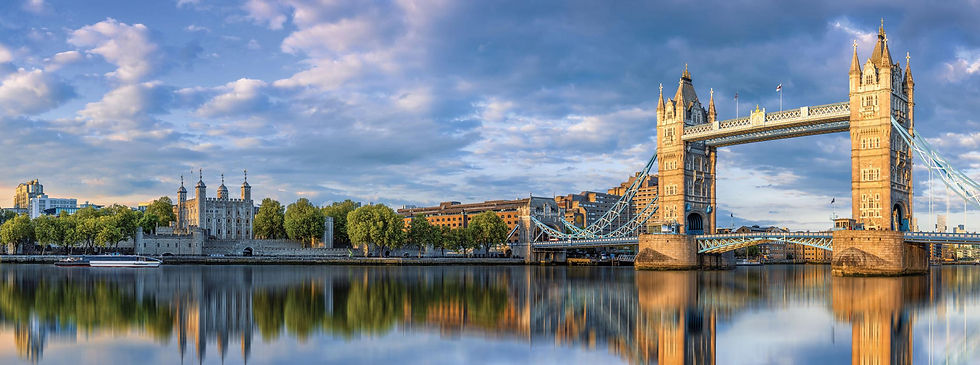
The Tower of London is closely connected with Henry's reign. Two of his queens—Anne Boleyn and Catherine Howard—were imprisoned and executed there.
Anne was executed on Tower Green in 1536 by a specially summoned swordsman.
She was then buried inside the nearby Chapel Royal of St Peter ad Vincula, where her remains still lie. Walking through the Tower today brings you remarkably close to one of the darkest chapters of Henry's reign.
Three Things to See
Hampton Court Palace
This is perhaps the best place in Britain to experience Henry VIII's world.
Explore his magnificent Great Hall, Tudor kitchens and royal apartments—and look for the intertwined initials of Henry and Anne Boleyn that survived Anne's downfall.

Tower of London
Visit the site where Anne Boleyn and Catherine Howard spent their final days and see the chapel where both queens are buried.
St George's Chapel, Windsor Castle
Henry VIII is buried here beside his third wife, Jane Seymour—the woman who finally gave him his long-awaited son.
Did You Know? – Henry VIII Was a Musician
Henry wasn't simply a warrior and serial husband. He was an accomplished musician who played several instruments and composed music. However, despite a popular myth, Henry VIII did not write "Greensleeves." The song probably appeared later during Elizabeth I's reign. So if someone tells you Henry wrote Greensleeves for Anne Boleyn...
don't believe them.
Historical Highlights
1491 – Henry is born at Greenwich Palace.
1509 – Becomes king aged 17 and marries Catherine of Aragon.
1533 – Marries Anne Boleyn.
1534 – Act of Supremacy breaks papal authority over the English Church.
1536 – Anne Boleyn is executed.
1536–1540 – Dissolution of the Monasteries.
1537 – Jane Seymour gives birth to Edward.
1540 – Henry marries and separates from Anne of Cleves, then marries Catherine Howard.
1542 – Catherine Howard is executed.
1543 – Marries Catherine Parr.
1547 – Henry VIII dies aged 55.
Imagine This...
You're standing inside Hampton Court Palace. The Great Hall is filled with hundreds of courtiers. Musicians are playing, fires are burning and enormous meals are arriving from the Tudor kitchens. Then the room falls quiet. Through the doorway walks a huge figure dressed in velvet, jewels and gold. Everyone bows. This is Henry VIII—a king whose search for a son has changed England forever.
Guide's Insider Tip
If you want to understand Henry VIII rather than simply read about him, visit Hampton Court Palace. Walk through the Great Hall and Tudor kitchens, then look for surviving
Henry tried to remove many of Anne's badges and initials after her execution—but some
Spotting an overlooked H & A more than 480 years later is one of those wonderful little connections with history that makes Hampton Court so special.
What Happened Next?
After six marriages and years of desperation for a male heir, Henry finally got what he wanted. His nine-year-old son Edward inherited the throne as Edward VI. But there is a delicious irony coming in the story. Henry VIII had turned England upside down trying to secure the Tudor dynasty through a son. Yet neither Edward VI nor Henry's daughter Mary would leave an heir. The Tudor who would ultimately become one of England's greatest monarchs was the daughter of the woman Henry had executed:
Elizabeth I.


Comments