
Henry VI (1422–1461, 1470–1471): The King Who Lost Two Kingdoms
- Belinda Hath
- Jul 31
- 4 min read
Who Was Henry VI?
Henry VI became king in 1422 when he was just nine months old, making him the youngest monarch ever to inherit the English throne.
He was the only son of the great warrior king Henry V, but the two men could not have been more different. While his father was a brilliant soldier and inspiring leader, Henry VI was gentle, deeply religious and preferred peace to war.
His reign would see England lose almost all of its lands in France and descend into a bitter civil war known as the Wars of the Roses.

A Baby King
Henry inherited an extraordinary legacy.
When his father, Henry V, died in 1422, Henry VI became King of England. Just a few weeks later, the French king, Charles VI, also died. According to the Treaty of Troyes, the infant Henry was recognised by the English as King of France as well.
Of course, a baby could not rule two kingdoms. Instead, powerful nobles governed in his name while the war in France continued.
The Dream Falls Apart
England's fortunes soon changed dramatically. In 1429, a young French peasant called Joan of Arc inspired the French army to a series of remarkable victories. The French gradually pushed the English back.
Although Henry VI was crowned King of France in Paris in 1431, he never truly controlled the country. By 1453, England had lost almost all of its French possessions, keeping only the port of Calais.
The Hundred Years' War was effectively over.

The Wars of the Roses Begin
Losing France damaged confidence in Henry's rule. Worse still, Henry suffered periods of severe mental illness and was sometimes unable to govern for months at a time.
Powerful noble families began competing for control of the kingdom.
The biggest rivalry was between the House of Lancaster, which supported Henry, and the House of York, whose leaders believed they had the stronger claim to the throne.
In 1455, fighting broke out at the First Battle of St Albans, marking the beginning of the Wars of the Roses.

Henry was captured more than once as the throne changed hands between Lancaster and York.
A King Twice Crowned... and Twice Deposed
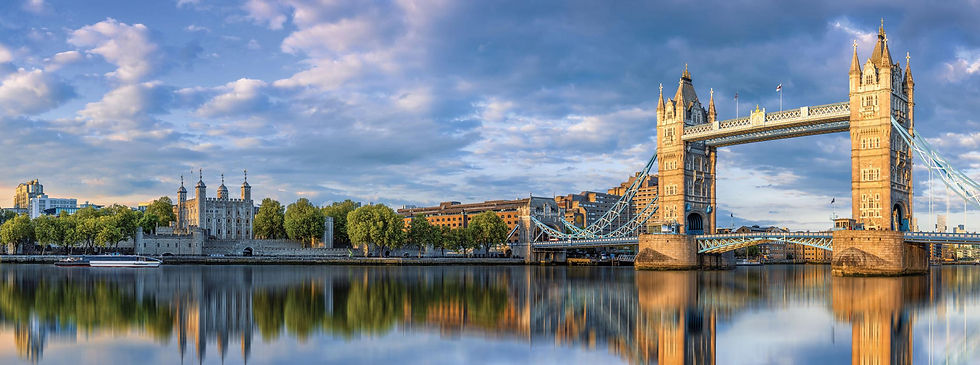
Henry's troubles were far from over. In 1461, Edward IV defeated the Lancastrians and became king. Henry was imprisoned in the Tower of London.
Then, in one of the most remarkable twists in English history, Henry briefly regained the throne in 1470 during a period known as the Readeption. His return lasted less than a year.
Edward IV reclaimed the crown in 1471, and Henry was once again imprisoned in the Tower. Soon afterwards, Henry died there under mysterious circumstances. Most historians believe he was murdered on Edward IV's orders.
Three Things to See
Eton College
Henry VI founded Eton College in 1440 to provide free education for talented boys. It remains one of Britain's most famous schools.
King's College, Cambridge
Henry also founded King's College in Cambridge. Its spectacular chapel is regarded as one of the finest examples of Gothic architecture in Europe.
The Tower of London
Visit the Tower where Henry spent his final days and is believed to have been murdered in 1471.
Did You Know?
Despite his troubled reign, Henry VI left one of England's greatest educational legacies.
He founded both Eton College and King's College, Cambridge, believing education should prepare young men for service to the Church and the Crown.
More than 580 years later, both institutions remain among the most famous schools and universities in the world.
Historical Highlights
1422 – Becomes king at just nine months old.
1431 – Crowned King of France in Paris.
1453 – England loses almost all its lands in France. Henry VI, aged 31, suffers a mental breakdown, plunging England into political crisis.
1455 – The Wars of the Roses begin.
1461 – Deposed by Edward IV.
1470 – Restored to the throne.
1471 – Deposed again and dies in the Tower of London.
Imagine This...
You're standing outside the walls of the Tower of London. Inside is a former king. Once crowned ruler of both England and France, Henry VI has lost almost everything—his kingdoms, his freedom and, soon, his life. His reign has plunged England into a civil war that will last for decades.
Guide's Insider Tip
If you visit Eton College, combine it with nearby Windsor Castle. It's easy to imagine the young Henry VI looking across the Thames towards the royal castle while planning the school that would become one of the world's most famous educational institutions.
Why Henry VI Matters
Henry VI inherited the greatest kingdom an English king had ever ruled—but by the end of his reign, almost everything had been lost. His weakness as a ruler, combined with the loss of France and bitter disputes over the crown, led directly to the Wars of the Roses, one of the most dramatic periods in English history. His successor, Edward IV, would become the first Yorkist king to seize the throne by force.


Comments