
Henry V (1413–1422): The Hero of Agincourt
- Belinda Hath
- Jul 31
- 4 min read
Who Was Henry V?

Henry V is remembered as one of England's greatest warrior kings. He transformed England from a kingdom troubled by rebellion into a nation feared across Europe, thanks to his extraordinary victory at the Battle of Agincourt in 1415.
The eldest son of Henry IV, Henry had already proved himself as a brave soldier before becoming king. As a teenager, he fought at the Battle of Shrewsbury, where he survived an arrow wound to the face that would have killed many men.
When he inherited the throne in 1413, he was determined to revive England's fortunes in France—and his success would make him a legend.
The Battle That Made a Legend
In 1415, Henry invaded France to press his claim to the French throne.
After capturing the town of Harfleur, disease and exhaustion reduced his army to around 6,000 men. As they marched towards the safety of Calais, they were intercepted by a French force thought to number between 20,000 and 30,000 soldiers.
The odds seemed impossible.
Rather than attacking, Henry chose his ground carefully. He positioned his army between two thick woods, forcing the much larger French army to squeeze into a narrow space where they could not use their superior numbers.
His 5,000 longbowmen stood on the flanks behind sharpened wooden stakes driven into the ground, protecting them from cavalry charges.
When the French advanced across a rain-soaked, freshly ploughed field, the heavy mud slowed them to a crawl. Thousands of English arrows rained down, throwing their ranks into confusion before they even reached the English lines.
Exhausted, trapped in deep mud and crushed together by the soldiers behind them, the French army collapsed into chaos. Against overwhelming odds, Henry had won one of the greatest victories in English history.

The Longbow That Changed Warfare
Before the longbow, medieval armies relied on knights on horseback, spearmen, footsoldiers or crossbows which were slow to reload. The English longbow was one of the most feared weapons of the Middle Ages. A skilled archer could fire up to ten arrows a minute, reaching targets more than 200 metres away.
At Agincourt, thousands of arrows darkened the sky. Combined with the muddy battlefield, they threw the advancing French army into confusion before many knights could even reach the English lines.
The battle showed that disciplined infantry and skilled archers could defeat heavily armoured knights, changing medieval warfare forever.
Why Agincourt Changed History
Agincourt was far more than a famous battle.
Henry's victory transformed him into Europe's most respected military leader and proved that clever tactics could overcome superior numbers.
Five years later, in 1420, the Treaty of Troyes recognised Henry as heir to the French throne. He married Catherine of Valois, daughter of King Charles VI of France, and for a brief moment it looked as though England and France would be united under a single king.

Sadly, Henry never lived to see it happen.
He died in 1422, aged just 35, probably from dysentery. Only weeks later, Charles VI also died. Instead of Henry ruling both kingdoms, his nine-month-old son became Henry VI. The fragile agreement soon fell apart, England gradually lost almost all of its lands in France, and within a generation the country was plunged into the Wars of the Roses.
Three Things to See
Westminster Abbey
Henry V is buried in Westminster Abbey beneath a magnificent medieval chantry chapel. Although damaged during the English Civil War, it remains one of the Abbey's most impressive royal tombs.
The Tower of London
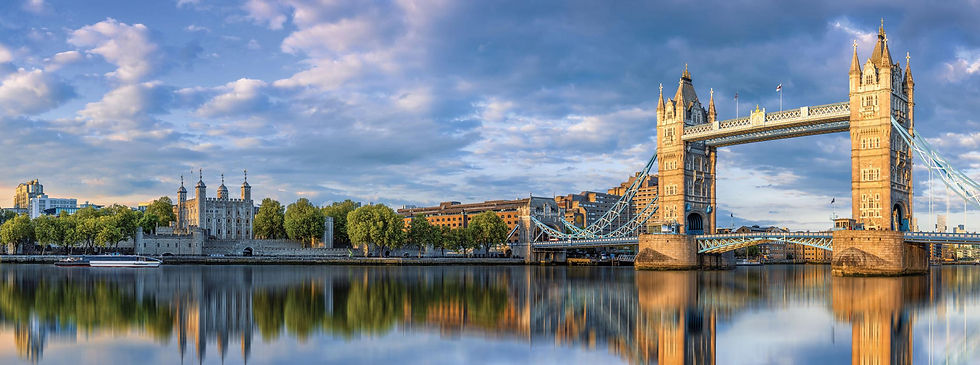
Henry used the Tower as a royal fortress and prison during his reign. Today, visitors can explore the medieval palace and discover how kings prepared for war.
Agincourt Battlefield (France)
Although now in northern France, the battlefield remains one of the most famous military sites in European history, with a visitor centre explaining how Henry achieved his remarkable victory.
Did You Know?
Before he became king, Henry was nearly killed at the Battle of Shrewsbury in 1403.
A bodkin arrow pierced his face and became lodged deep beside his nose.
A royal surgeon, John Bradmore, invented a special instrument to remove the arrow without causing further damage—a remarkable feat of medieval medicine.
Henry recovered completely and carried the scar for the rest of his life.
Historical Highlights
1386/87 – Henry is born at Monmouth Castle.
1403 – Seriously wounded at the Battle of Shrewsbury.
1413 – Becomes King Henry V.
1415 – Wins the Battle of Agincourt.
1420 – Marries Catherine of Valois and signs the Treaty of Troyes.
1422 – Dies in France aged 35.
Imagine This...
The rain has stopped, but the ground beneath your feet is a sea of mud. Across the field stands the largest French army you've ever seen. You grip your longbow as King Henry rides along the line, encouraging every man before the battle begins. Moments later, thousands of arrows fill the sky. Against impossible odds, England is about to win one of the greatest military victories in its history.
Guide's Insider Tip
Visit Westminster Abbey to see Henry V's tomb and look up at his beautiful chantry chapel. Afterwards, head to the nearby Jewel Tower, one of the few surviving buildings from the medieval Palace of Westminster, where Henry himself would have walked before leaving for his famous campaign in France.


Comments