
Elizabeth I (1558–1603) – The Virgin Queen and the Spanish Armada
- Belinda Hath
- Aug 2
- 7 min read
Who Was Elizabeth I?

Elizabeth I is one of the most famous monarchs in English history.
She was the daughter of Henry VIII and Anne Boleyn—the woman Henry had executed when Elizabeth was only two years old.
Elizabeth had been declared illegitimate, survived the dangerous reigns of her brother Edward VI and sister Mary I, and had even spent time imprisoned in the Tower of London. Yet in 1558, aged 25, she became Queen of England. She would rule for 44 years, defeat the Spanish Armada and give her name to an entire age.
Catholic or Protestant? Elizabeth Finds a Middle Way
Elizabeth inherited a country bitterly divided by religion. Her father Henry VIII had broken with Rome. Her brother Edward VI had made England firmly Protestant. Her sister Mary I had returned England to Catholicism. Now Elizabeth changed it again.
Elizabeth was Protestant and restored the monarch as head—technically Supreme Governor—of the Church of England. But she was more cautious than Edward had been.
Elizabeth wanted a Church that was Protestant in its beliefs but retained some familiar traditions and ceremonies. The easiest way to remember the Tudor religious rollercoaster is:
Henry VIII changed who ran the Church. Edward VI changed what the Church believed. Mary changed it back. Elizabeth found a middle way.
This Elizabethan Religious Settlement helped shape the Church of England that exists today.
Why Was Elizabeth Called the Virgin Queen?
Everyone expected Elizabeth to marry. A husband could provide an heir, strengthen England through a foreign alliance and, according to the attitudes of the time, help a woman rule. Elizabeth had plenty of suitors. But she never married.
Part of the problem was political. Marry a foreign prince and England might come under foreign influence. Marry an English nobleman and every other powerful family could become jealous. Elizabeth realised that remaining unmarried gave her something extremely useful: independence.
She could even use the possibility of marriage as a diplomatic bargaining tool without ever actually going through with it. Over time, Elizabeth deliberately cultivated the image of the Virgin Queen, devoted not to a husband but to England itself. Virginia in North America was later named in honour of her.
Mary, Queen of Scots – Elizabeth's Dangerous Cousin
Elizabeth had another enormous problem: Mary, Queen of Scots.

Mary was Elizabeth's cousin (daughter of Henry's sister, Margaret) and a Catholic with her own claim to the English throne. To many Catholics who believed Elizabeth was illegitimate, Mary was the rightful Queen of England.
After being forced from the Scottish throne, Mary fled to England in 1568, hoping Elizabeth would help her. Instead, Elizabeth kept her under guard for almost 19 years. During those years, several Catholic plots attempted to remove Elizabeth and replace her with Mary.
Eventually, letters appeared linking Mary to the Babington Plot, a plan to assassinate Elizabeth. Elizabeth faced a terrible decision. Executing an anointed queen set a dangerous precedent. But leaving Mary alive meant Catholic conspirators would always have an alternative monarch. In 1587, Mary, Queen of Scots was executed. The consequences would be enormous.
The Spanish Armada
By the 1580s, relations between Protestant England and Catholic Spain had collapsed.
Spain's Philip II had actually once been Elizabeth's brother-in-law—he had been married to Mary I. Now he was England's greatest enemy.
English sailors such as Sir Francis Drake were attacking Spanish ships and treasure, England was supporting Protestant rebels fighting Spanish rule in the Netherlands, and Elizabeth had executed the Catholic Mary, Queen of Scots. Philip decided to invade England.
In 1588, an enormous Spanish fleet—the Armada—sailed towards the English Channel. Its mission was to help transport a Spanish army from the Netherlands across the Channel and invade England. England appeared to be in terrible danger.

How Did England Defeat the Armada?
It wasn't simply a lucky storm. The English ships were generally smaller and more manoeuvrable, allowing commanders including Lord Howard of Effingham and Francis Drake to harass the Spanish fleet from a distance. Then came the decisive moment at Calais. The Spanish fleet anchored in a defensive crescent formation.
During the night, the English sent fireships—burning vessels packed with combustible material—towards them. Panic spread through the Spanish fleet. Ships cut their anchors and scattered to escape the flames. The English attacked the disorganised fleet at the Battle of Gravelines. Unable to complete the invasion, the Armada was forced north around Scotland and Ireland to return home. Then terrible weather struck. More Spanish ships were wrecked. So England's victory came from a combination of English naval tactics, Spanish logistical problems and brutal weather. The supposedly unstoppable Spanish Armada had failed.
"I Have the Heart and Stomach of a King"

While England waited for the expected Spanish invasion, Elizabeth travelled to Tilbury to address troops gathered to defend the country. Tradition remembers her riding among them dressed partly in armour. There she delivered one of the most famous royal speeches in English history, declaring:
"I know I have the body but of a weak and feeble woman; but I have the heart and stomach of a king."
Whether every surviving word is exactly as Elizabeth delivered it is debated, but the speech became part of her legend. A female monarch who had once been considered politically vulnerable had become the symbol of England's resistance.
The Elizabethan Golden Age
Elizabeth's reign became associated with an extraordinary flowering of English culture.
This was the age of William Shakespeare, Christopher Marlowe and the Elizabethan theatre. London's playhouses attracted everyone from apprentices to aristocrats.
Explorers sailed further across the world.

Francis Drake became the first Englishman to circumnavigate the globe. Walter Raleigh helped promote English attempts to establish colonies in North America. England was beginning its transformation from a relatively small European kingdom into a global maritime power.
For later generations, Elizabeth's reign became known as a Golden Age. The reality was more complicated—there was poverty, war and religious persecution too—but the cultural achievements of the period were remarkable.
The Queen Who Made Herself an Icon
Elizabeth understood the power of image remarkably well. As she grew older, her portraits became less realistic and increasingly symbolic.
Pearls represented virginity. Crowns represented royal authority. Globes and maps represented England's growing ambitions overseas.

In the famous Armada Portrait, Elizabeth rests her hand on a globe while paintings behind her show the Spanish fleet being destroyed. This wasn't simply a portrait.
It was royal propaganda. Elizabeth had transformed herself from a woman into a symbol:
Gloriana—the Virgin Queen who protected England.
But Who Would Be King Next?
There was one enormous problem Elizabeth never solved. She had no children. As she grew older, the question became increasingly urgent. Who would inherit the throne?
Ironically, the strongest candidate was the son of the woman Elizabeth had executed:
James VI of Scotland, son of Mary, Queen of Scots.
When Elizabeth died in 1603, James inherited the English throne as James I. For the first time, England and Scotland had the same monarch.
Three Things to See
Westminster Abbey
Elizabeth is buried in Westminster Abbey. Remarkably, she shares the same tomb chamber as her Catholic half-sister Mary I. Two sisters who took England in completely different religious directions now rest together.
The Tower of London
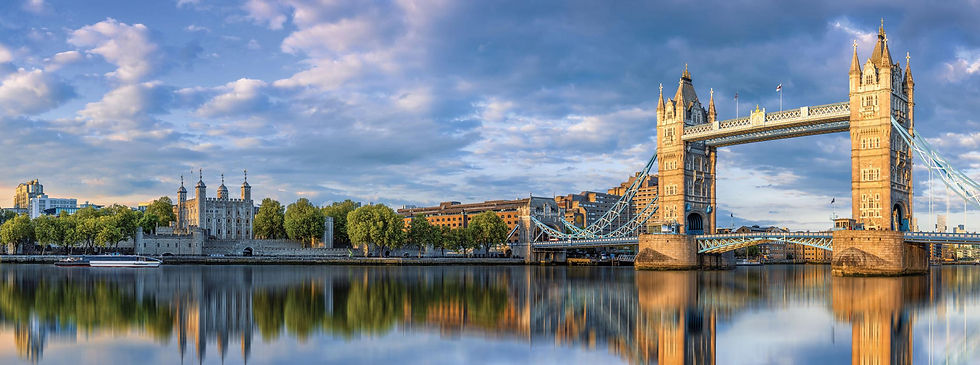
Elizabeth entered the Tower twice under dramatically different circumstances. In 1554, Mary I sent her there as a suspected traitor. In 1559, Elizabeth returned as queen before her coronation. Imagine how that must have felt.
The Globe Theatre
Although today's Shakespeare's Globe is a reconstruction, it provides a wonderful glimpse into the theatrical world that flourished during Elizabeth's reign.
Did You Know? – Elizabeth Had Rotten Teeth
Elizabeth loved sugar. Unfortunately, sugar was an expensive luxury in Tudor England—and dental hygiene wasn't exactly sophisticated. As Elizabeth grew older, several of her teeth reportedly became badly decayed or were lost. Sugar was so expensive that blackened teeth could even suggest wealth, because only rich people could afford to consume large quantities of it. Elizabeth's elaborate white makeup also helped create the instantly recognisable image of the ageing Virgin Queen. The reality underneath all that royal splendour was rather less glamorous.
Historical Highlights
1533 – Elizabeth is born to Henry VIII and Anne Boleyn.
1536 – Anne Boleyn is executed.
1554 – Elizabeth is imprisoned in the Tower of London.
1558 – Elizabeth becomes queen aged 25.
1559 – Elizabethan Religious Settlement.
1568 – Mary, Queen of Scots arrives in England.
1587 – Mary, Queen of Scots is executed.
1588 – Spanish Armada defeated.
1600 – East India Company receives its royal charter.
1603 – Elizabeth dies aged 69 after a 44-year reign.
Imagine This...
It's the summer of 1588. The most powerful invasion fleet in Europe is approaching England. Thousands of soldiers wait at Tilbury, expecting Spanish troops to land.
Then their queen appears. Elizabeth is a woman ruling in a world dominated by kings.
She rides before her troops and tells them that although she may have "the body of a weak and feeble woman" she has "the heart and stomach of a king." The Spanish invasion never comes. The Armada is defeated. And the legend of Elizabeth I is born.
Guide's Insider Tip
When visiting Westminster Abbey, find Elizabeth's magnificent tomb and then remember who lies beneath her. Mary I. The Catholic queen who tried to reverse the Reformation and the Protestant queen who established England's lasting religious settlement ended up sharing the same resting place.
Then head to the National Portrait Gallery and look for Elizabeth's portraits. Once you understand the symbolism—the pearls, crowns, globes and elaborate dresses—they become much more interesting than simply pictures of a Tudor queen.
What Happened Next?
Elizabeth died in 1603 without children, bringing the Tudor dynasty to an end. The crown passed to James VI of Scotland, the son of Mary, Queen of Scots. He travelled south and became: James I of England.
And this creates another huge moment in the story. England and Scotland now had one king—but they were NOT yet one country. James's reign also gives us one of Britain's most famous stories: Guy Fawkes and the Gunpowder Plot.


Comments