
Edward VIII (1936) – The King Who Gave Up the Crown for an American Woman
Who Was Edward VIII?
Edward VIII was the eldest son of George V and the handsome, fashionable Prince of Wales who seemed destined to become a glamorous modern king. Known to his family as David, he was enormously popular, travelled widely and had a very different personality from his serious, traditional father. When George V died in January 1936, Edward became king.

But there was a problem. Edward was in love with Wallis Simpson, a sophisticated American woman from Baltimore who had already been divorced once and was still married to her second husband when Edward became king. Edward wanted to marry her.
Less than a year later, that relationship would cost him his throne.
Who Was Wallis Simpson?
Wallis was an American socialite who had met Edward through fashionable London society. By the mid-1930s they had become extremely close, and Edward was determined to marry her once her second divorce was complete. Today, a king marrying a divorced woman might not sound particularly shocking. In 1936 it was explosive.
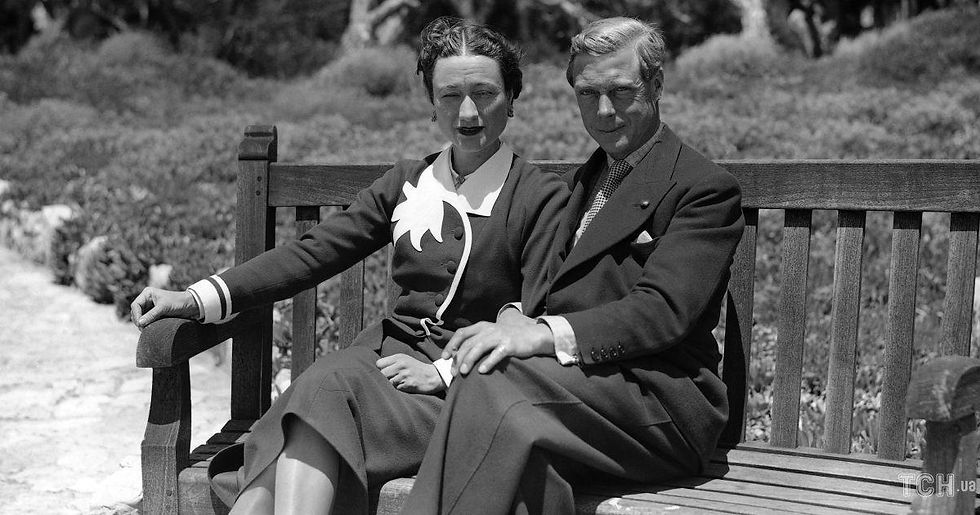
Edward wasn't simply a celebrity who could marry whoever he wanted. He was King and head of the Church of England, and at the time the Church strongly opposed remarriage after divorce while a former spouse was still alive.
The British government also believed that Wallis would not be accepted as queen, and governments across the wider British Empire opposed the marriage too. Edward therefore faced an extraordinary choice: keep the Crown or marry Wallis. He chose Wallis.
The Abdication Crisis
Various compromises were discussed. Edward hoped he might marry Wallis without making her queen, but the government rejected the idea. Eventually Edward concluded that he couldn't remain king and marry the woman he loved.
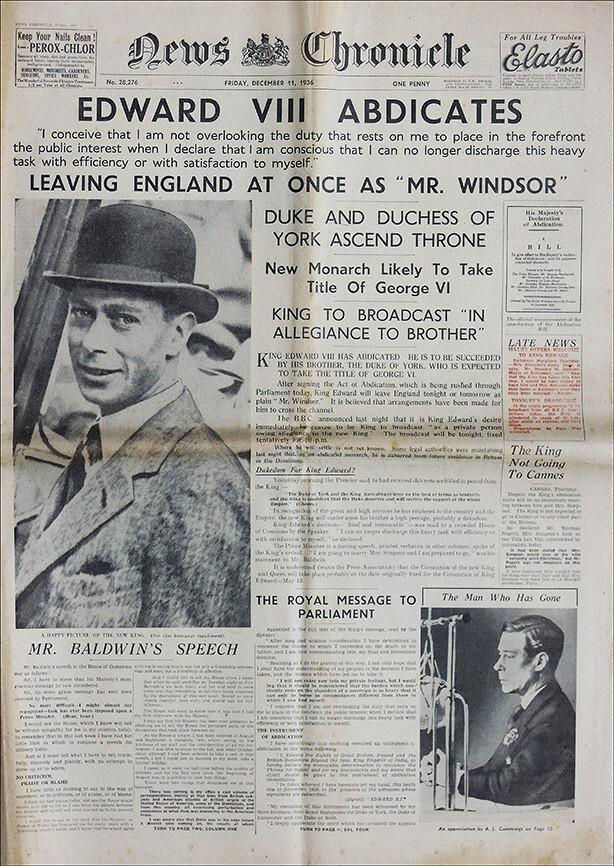
On 10 December 1936, he signed the Instrument of Abdication at Fort Belvedere, his home in Windsor Great Park. His three younger brothers witnessed his signature. The following day, Parliament formally approved the abdication.
That evening Edward addressed the nation by radio and explained that he had found it impossible to carry the responsibilities of king without the woman he loved beside him.
After just 325 days, his reign was over. He hadn't even been crowned.

One Decision Changed the Royal Family Forever
Edward's abdication completely changed the future of the monarchy.
His younger brother Albert—“Bertie”—Duke of York suddenly became King George VI.
Bertie had never expected or particularly wanted to be king. He was shy, struggled with a stammer and had been enjoying a relatively private family life with his wife Elizabeth and their two daughters. One of those daughters was Princess Elizabeth.
Before Edward abdicated, Elizabeth wasn't expected to become queen. Afterwards, she suddenly became heir presumptive to the throne. So without Wallis Simpson and the abdication of Edward VIII, Elizabeth II would almost certainly never have become queen.
The Duke and Duchess of Windsor
After giving up the throne, Edward became the Duke of Windsor. He and Wallis married in France in 1937. She became the Duchess of Windsor, but she was not allowed to use the style Her Royal Highness, something Edward deeply resented.
Their relationship with the Royal Family remained strained, and the couple spent most of their lives living abroad, particularly in France. Edward had exchanged Buckingham Palace and the British throne for life with Wallis. Whether you see that as one of history's great love stories or an extraordinary abandonment of duty depends very much on your point of view.
The Awkward Nazi Connection
There's also a darker and much less romantic part of Edward's story.
In 1937, Edward and Wallis visited Nazi Germany and met Adolf Hitler. Photographs of the former king meeting Hitler later became extremely damaging.

During World War II, the British government was concerned about Edward's political judgement and his contacts in Europe. He was appointed Governor of the Bahamas, effectively moving him away from the centre of the European war.
There has been enormous speculation about Edward's attitudes towards Nazi Germany. Some sensational claims remain disputed, but his visit to Hitler and his poor political judgement are well documented. It complicates the popular image of Edward simply as “the king who sacrificed everything for love.”
What Happened to Edward and Wallis?
Edward and Wallis remained married for the rest of his life and became fixtures of international high society, particularly in Paris. They never had children. Edward returned to Britain occasionally but never again had an official role at the centre of the monarchy. He died in Paris in 1972, aged 77. His body was returned to Britain and he was buried at the Royal Burial Ground at Frogmore, near Windsor Castle. Wallis died in 1986 and was buried beside him.
Three Things to See
St James's Palace
After George V died, Edward VIII formally proclaimed his accession at St James's Palace.
The palace remains incredibly important because new British monarchs are still formally proclaimed here by the Accession Council. Edward began 1936 here as Britain's new king. By the end of the year, he was no longer king at all.
Fort Belvedere – Windsor Great Park
Edward used Fort Belvedere as his private country home and it was here that the abdication crisis reached its extraordinary conclusion. On 10 December 1936, Edward sat down and signed away his throne while his three younger brothers watched. Fort Belvedere isn't normally open to the public, but knowing the story makes the wider Windsor area even more interesting.
Windsor Castle
Edward chose the title Duke of Windsor after his abdication—the same Windsor name his father George V had created for the Royal Family in 1917. Edward and Wallis are both buried nearby at Frogmore. So Windsor connects both ends of Edward's extraordinary royal story: the dynasty he was born to lead and the title he carried after giving up its throne.
Did You Know? – Edward VIII Was Never Crowned
Edward became king automatically when George V died in January 1936, and his coronation was planned for May 1937. But he abdicated before it happened. The coronation date was already arranged, Westminster Abbey was preparing and plans were well underway.
Rather than waste everything, the same date was eventually used for the coronation of his younger brother George VI. So Edward VIII is one of the very few British monarchs who reigned as king but was never crowned.
Historical Highlights
1894 – Edward is born.
1911 – Becomes Prince of Wales.
1936 – George V dies and Edward becomes king.
1936 – Wallis Simpson begins divorce proceedings against her second husband.
10 December 1936 – Edward signs the Instrument of Abdication.
11 December 1936 – His reign officially ends after just 325 days.
1937 – Edward marries Wallis in France.
1937 – Edward and Wallis visit Nazi Germany and meet Hitler.
1972 – Edward dies in Paris.
Imagine This...
It's December 1936 and Britain is watching an extraordinary royal drama unfold. Edward VIII has been king for less than a year, but he is determined to marry Wallis Simpson, an American woman whose divorce makes her unacceptable as queen to the government and Church establishment of the time. Edward has reached a decision. At Fort Belvedere near Windsor, he sits at a table while his three younger brothers watch and signs away the throne he was born to inherit. Within hours, shy and reluctant Bertie is King George VI and Bertie's ten-year-old daughter Elizabeth has suddenly moved dramatically closer to the Crown. One man's decision to marry the woman he loved has changed the course of the British monarchy for generations.
Guide's Insider Tip
When you're outside St James's Palace, remember that this is where Edward VIII was formally proclaimed king in January 1936. He must have expected decades on the throne; instead, his entire reign would be over before Christmas.
Then think about Buckingham Palace just a short walk away. Edward never reached his planned coronation, never settled into the long reign everyone expected and never created the royal family of his own that might have inherited the Crown.
For guests who know Elizabeth II as one of the most famous monarchs in history, this is the great Edward VIII “what if?” If Edward had remained king and eventually produced an heir, the line of succession would have been completely different. George VI might never have become king—and Elizabeth II might have remained simply Princess Elizabeth. That's why Edward's 325-day reign matters far more than its length suggests.
What Happened Next?
Edward's abdication left his younger brother Bertie with a job he had never expected to have. He became George VI.
Britain had just endured one of the greatest royal scandals of modern times, and the new king was shy, anxious about public speaking and struggling with a stammer.
Then, less than three years later, Britain went to war with Nazi Germany. The reluctant king would become the wartime king. And beside him would be his wife Elizabeth and their young daughter—the future Queen Elizabeth II.


Comments