
Edward V (1483) – The Lost Prince in the Tower
- Belinda Hath
- Aug 1
- 4 min read
Who Was Edward V?
Edward V has one of the shortest—and most mysterious—stories of any English king.

He was just 12 years old when his father, Edward IV, died suddenly in April 1483. Edward immediately became king and travelled towards London for his coronation. But he would never be crowned. Within weeks, Edward was living inside the Tower of London. His younger brother joined him there soon afterwards. Then both boys simply disappeared. Their fate has remained one of Britain's greatest royal mysteries for more than 500 years.
A 12-Year-Old King
Edward was the eldest son of Edward IV and Elizabeth Woodville.
Because he was still a child when his father died, Edward IV had appointed his trusted younger brother Richard, Duke of Gloucester, to protect the young king and oversee the kingdom. That uncle would soon become one of the most controversial kings in English history: Richard III.
As Edward travelled towards London, Richard intercepted his party and arrested several of the Woodville relatives and supporters accompanying him. Edward continued to London under his uncle's protection. He was then taken to the Tower of London.
That sounds sinister today, but initially it wasn't necessarily alarming. The Tower was also a royal palace, and monarchs traditionally stayed there before their coronations. Edward's coronation was planned. But it never happened.
The Princes in the Tower
Edward's nine-year-old brother, Richard, Duke of York, was eventually brought to the Tower to join him. For a while, people reportedly saw the two boys playing and walking within the Tower grounds. Then the sightings became less frequent. By the end of the summer of 1483, they had disappeared from public view. Nobody knows for certain what happened next.

How Did Their Uncle Become King?
While the boys were inside the Tower, an extraordinary claim emerged.
It was alleged that Edward IV had previously promised to marry another woman before marrying Elizabeth Woodville. Under the law of the time, if that earlier agreement was a valid marriage contract, Edward IV's marriage to Elizabeth could be considered invalid. And that would mean their children—including Edward V—were illegitimate and could not inherit the throne.
Parliament later confirmed this in an act known as Titulus Regius. Edward V was removed from the succession. His uncle Richard was declared the rightful king and crowned:
Richard III
Suddenly, England had a new king.

And the two boys who had previously stood between Richard and the crown were still inside the Tower.
Were the Princes Murdered?
This is the mystery that has fascinated historians for centuries. The traditional story is that Richard III ordered the boys to be murdered so they could never challenge his claim to the throne. But there is no surviving document proving that Richard gave such an order, and nobody knows exactly when—or even whether—the boys were killed.
There were other people who could have benefited from their deaths. One was Henry Tudor, the future Henry VII, who would defeat Richard III and take the throne in 1485.
Another was the powerful Duke of Buckingham, who initially supported Richard but later rebelled against him. So the question remains: Did Richard III murder his nephews—or has history blamed the wrong man?
We still don't know.
The Bones Beneath the Staircase
And then the mystery gets even better.
In 1674, almost 200 years after the princes disappeared, workers renovating the Tower of London discovered a wooden chest containing the bones of two children. It had been buried beneath a staircase near the White Tower.
King Charles II believed they could be the remains of Edward V and his brother and ordered them to be buried in Westminster Abbey. The bones were examined in 1933, but the scientific techniques available at the time couldn't establish their identities.
They remain in Westminster Abbey today.
So somewhere inside the Abbey may lie the answer to one of Britain's greatest historical mysteries.
Three Things to See
The Tower of London
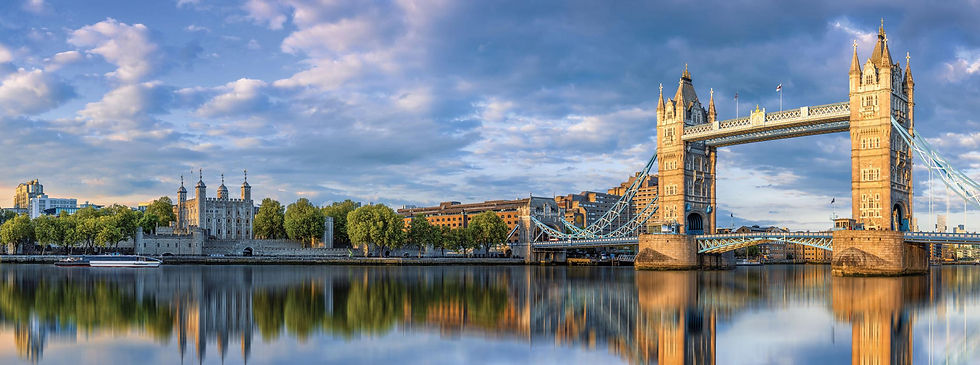
This is the essential place connected with Edward V. Walk through the fortress where the two young princes were last known to have lived.
Westminster Abbey
The bones discovered at the Tower in 1674 were placed in an urn in the Abbey by order of Charles II, where they remain today.
St Paul's Church, Ludlow
Before becoming king, Edward spent much of his childhood at Ludlow Castle. His connection with Ludlow provides a glimpse of his life before the events that made him famous.
Did You Know? – A King Who Was Never Crowned
Edward V is one of the very few English monarchs who became king but was never crowned. His reign lasted only 78 days. There was no great battle, no coronation and no opportunity for Edward to rule. Yet more than five centuries later, he remains famous because of one unanswered question: What happened to the Princes in the Tower?
Historical Highlights
1470 – Edward is born.
9 April 1483 – Edward IV dies and his 12-year-old son becomes Edward V.
May 1483 – Edward arrives in London and stays in the Tower.
June 1483 – His younger brother Richard joins him.
June 1483 – The boys are declared illegitimate.
26 June 1483 – Richard III becomes king.
Summer 1483 – The princes disappear from public view.
1674 – Bones belonging to two children are discovered beneath a staircase in the Tower.
Imagine This...
You are 12 years old. Your father has suddenly died. You've been told that you are now King of England, and you're travelling to London for your coronation. Instead, your relatives are arrested. Your uncle takes control of the kingdom. You're moved into the Tower of London. Your little brother joins you. Then you're told you aren't really king at all.
Your uncle takes your crown. And slowly, the outside world stops seeing you... More than 500 years later, nobody knows what happened next.
Guide's Insider Tip
When visiting the Tower of London, don't think of it only as a prison. In Edward V's time it was also a magnificent royal palace, which helps explain why his arrival there wasn't initially seen as proof that he was in danger.
Then look towards the White Tower, close to where the mysterious children's bones were discovered in 1674. Knowing that the bones might belong to Edward and his younger brother makes this one of the eeriest royal stories you'll encounter anywhere in London.


Comments