
Edward III (1327–1377): The Warrior King
- Belinda Hath
- Jul 31
- 4 min read
Who Was Edward III?
Edward III became king at just 14 years old after his father, Edward II, was forced to abdicate. At first, the country was ruled by his mother, Queen Isabella, and her ally, Roger Mortimer. But at the age of 17, Edward dramatically seized power, arrested Mortimer, and began one of the greatest reigns in English history.
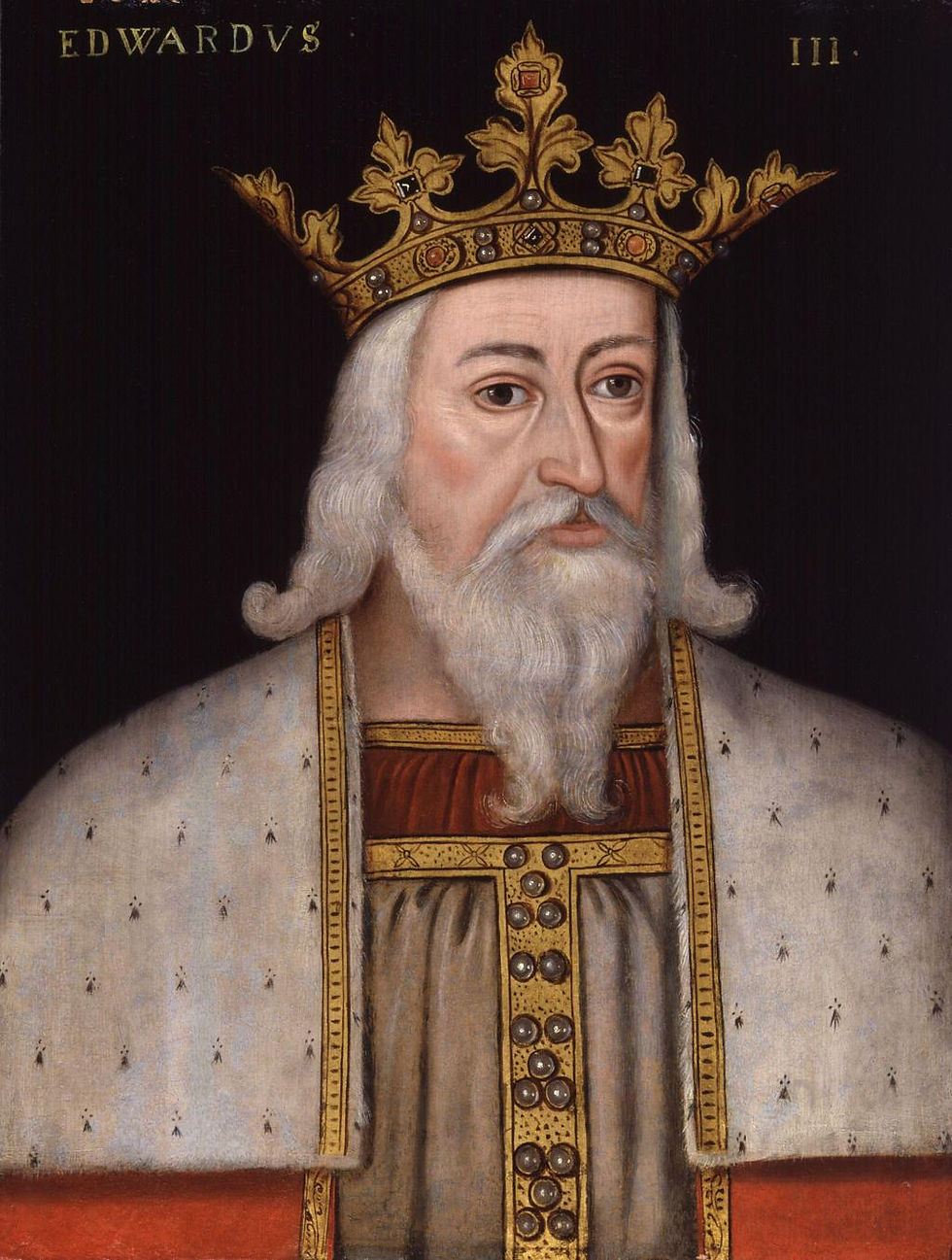
During his 50-year reign, Edward transformed England into a military powerhouse, founded the Order of the Garter, and began the long conflict with France known as the Hundred Years' War.
The King Who Claimed France
Edward believed he had a rightful claim to the French throne through his mother, Isabella of France.
When the French king rejected his claim, Edward declared war in 1337, beginning what became known as the Hundred Years' War. Although the conflict lasted 116 years, with periods of peace, Edward won many of its greatest victories.
His armies became famous for their deadly longbowmen, whose skill would change medieval warfare forever.

The Victory at Crécy
Edward's most famous triumph came at the Battle of Crécy in 1346. The English army faced a much larger French force. Instead of relying on heavily armoured knights, Edward positioned thousands of skilled longbowmen on high ground.
As the French cavalry charged, wave after wave of arrows filled the sky. The attack collapsed, leaving the French army in chaos. It was one of the greatest victories in English military history and proved that tactics and discipline could defeat superior numbers.
Ten years later, Edward's son, Edward, the Black Prince, captured the King of France at the Battle of Poitiers, cementing England's reputation as Europe's leading military power.
The Black Death
Not all of Edward's reign was filled with victory.
In 1348, the Black Death swept across England, killing perhaps one-third to one-half of the population. Entire villages disappeared, fields were left unworked, and life changed forever.
Although the plague brought unimaginable suffering, it also transformed English society. With far fewer workers available, labour became more valuable, wages increased, and ordinary people gained greater opportunities than ever before.
Three Things to See
Windsor Castle – Visit St George's Chapel, home of the Order of the Garter, Britain's oldest and most prestigious order of chivalry, founded by Edward III.
Canterbury Cathedral – See the magnificent tomb of Edward's legendary son, the Black Prince.
Westminster Abbey – Edward III is buried here alongside many of England's greatest monarchs.
Did You Know?
In 1348, Edward III founded the Order of the Garter, Britain's oldest and most prestigious order of chivalry.
Legend says the idea began when a lady dropped her blue garter while dancing at a royal ball. As people laughed, Edward picked it up and declared, "Honi soit qui mal y pense"—Old French for "Shame on anyone who thinks evil of it." In other words, the embarrassment belonged to those mocking the lady, not to her. The phrase became the Order's motto and is still used today.
The Order celebrated the ideals of chivalry—the medieval code of honour followed by knights. Chivalry wasn't just about being brave in battle; it also meant showing loyalty, courage, honesty, courtesy, and protecting those who were weaker.
Today, the Order of the Garter remains one of the highest honours in the United Kingdom. Membership is personally chosen by the monarch and is limited to 24 Knights and Ladies Companion, alongside the King or Queen and senior members of the Royal Family. Those appointed are people who have given exceptional service to Britain, including distinguished military leaders, former prime ministers, members of the Royal Family, and occasionally foreign monarchs. Notable members have included Sir Winston Churchill, Sir John Major, King Charles III, Prince William, and Queen Camilla.
Every June, the members gather at St George's Chapel, Windsor Castle, wearing magnificent blue velvet robes, feathered hats and the famous blue garter bearing the Order's motto—a colourful tradition that has continued for almost 700 years.

Historical Highlights
1327 – Edward III becomes king aged 14.
1330 – Seizes power from Roger Mortimer.
1337 – Hundred Years' War begins.
1346 – English victory at the Battle of Crécy.
1348 – The Black Death reaches England.
1348 – Order of the Garter is founded.
1356 – The Black Prince captures the King of France at the Battle of Poitiers.
1377 – Edward III dies after a reign of 50 years.
Imagine This...
You're standing on a hillside near Crécy. Across the valley, thousands of French knights lower their lances and charge towards the English army. Suddenly, the sky darkens as thousands of longbow arrows whistle overhead. Horses stumble, armour is pierced, and the mighty French attack falls apart before it even reaches the English lines. Against all expectations, England has won one of its greatest victories.
Guide's Insider Tip
If you visit Windsor Castle, don't miss St George's Chapel. Look above the choir stalls and you'll see the colourful banners of the Knights of the Garter, a tradition that has continued for nearly 700 years since Edward III founded the order.


Comments